Bangkok Ayutthaya Railway + Floating Markets Full Day Tour — Three Bucket-List Experiences in One Day (2026)
Some days in Thailand deserve a longer commitment. The Ayutthaya Railway and Floating Markets Full Day Tour is built around that idea: instead of choosing between ancient temples, a scenic train ride through Thai countryside, and a floating market, you get all three in a single 10-hour outing. It is one of the most efficiently designed day trips among all bangkok thailand tours, combining Ayutthaya's UNESCO World Heritage ruins, a classic Thai railway journey, and a stop at a traditional floating market into one satisfying sequence. Rated 4.7 stars from 2,041 travellers, here is everything you need to know before you book.
About This Tour
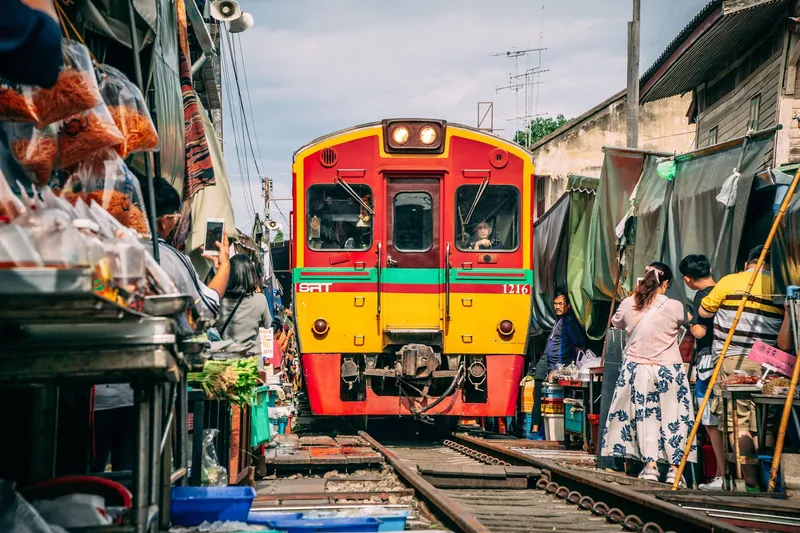
Ride a classic Thai train through rural countryside — rice paddies, palm groves, and canal villages — on the legendary Bangkok–Ayutthaya line
Walk the UNESCO World Heritage ruins of Wat Mahathat, Wat Phra Si Sanphet, and the floating Buddha head — the iconic images of ancient Siam
Stop at a traditional Thai floating market and browse vendor boats selling tropical fruit, street food, and handmade crafts along the canal
English-speaking guide throughout the day explains the history of Ayutthaya's fall, its temples, and the living traditions of Thailand's waterway markets
A genuinely long day — time is used well across three distinct locations rather than wasted in transit, giving you meaningful time at each stop
Round-trip transport from Bangkok, train boarding assistance, and all transfers between sites are included — no need to navigate Thailand's rail system alone
Why This Combo Tour Is Different from a Standalone Ayutthaya or Market Trip
Bangkok's day-trip scene offers dedicated tours to Ayutthaya and dedicated tours to floating markets. What makes this tour stand apart is the addition of the railway leg — and the fact that it sequences all three into one logical, unhurried day without redundancy.
If you have already looked at the standalone Ayutthaya temple day trip, you will know the appeal: over 400 years as the capital of Siam, more than a dozen major temple complexes, the tree-rooted Buddha head at Wat Mahathat, and a palpable sense of history that few sites in Southeast Asia match. This tour covers those same highlights, but adds a dimension the pure temple trip cannot offer: you travel part of the journey by train.
The Bangkok–Ayutthaya railway line runs through central Thailand's flat alluvial plain — the heartland of Thai agriculture. From a window seat, the landscape shifts from Bangkok's outer suburbs into open rice paddies and riverside villages that look much as they did a century ago. This is not a tourist railway; it is the working State Railway of Thailand, the same line that locals use to commute between cities. That ordinariness is part of its appeal — you are moving through Thailand rather than being shuttled above it on an expressway.
The floating market stop rounds out the day with colour and canal culture. Thailand's waterway markets are a genuine historical institution, not a modern invention for tourists. Arriving at one as part of a day that has already covered ancient ruins and countryside rail travel gives the market a different context — you are seeing three strands of Thai culture, from the ancient to the agricultural to the mercantile, in a single outing.
The Train Journey — Travelling Through the Thai Countryside
The train leg of this tour is one of its most distinctive features and the primary reason it stands apart from every other Ayutthaya day trip on the market. The Bangkok–Ayutthaya route is one of Thailand's most scenic short rail journeys, covering approximately 70 kilometres through the Central Plains — the low-lying basin where Thailand's rice civilisation developed over thousands of years.
- Depart from one of Bangkok's historic rail terminals — the kind of high-ceilinged, tile-floored stations that still feel connected to the 1940s, when this line carried royalty and diplomats north to Chiang Mai
- The journey takes roughly 90 minutes at a comfortable pace, with frequent views of the Chao Phraya River and its tributaries threading through the flat countryside
- Traditional Thai wooden houses on stilts, small temple spires, and lone spirit houses at the corners of paddies mark the route as distinctly rural Central Thailand
- Vendors board the train at some stations selling rice dishes, grilled pork skewers, sweet corn, and cold drinks — eating on the train is half the experience
- Your guide travels with you and can explain what you are seeing from the window, as well as give context for Ayutthaya before you arrive
This is not a high-speed journey and is not designed to be. The pleasure is in the slowness: watching the landscape open up, feeling the carriage rock gently, and understanding — in a way no minibus transfer can convey — how far Bangkok's urban sprawl extends and how quickly Thailand's countryside begins beyond it. Travellers who have taken the overnight train to Chiang Mai often describe the railway as the most honest way to see Thailand; this tour gives you a shorter version of that same experience.
Ayutthaya Temples — Which Sites This Tour Covers
Ayutthaya was founded in 1350 and served as the Siamese capital for 417 years until its sacking by Burmese forces in 1767. The city was rebuilt slightly to the south of its original footprint, leaving the old royal centre as an archaeological island encircled by three rivers. Today that island is a UNESCO World Heritage Site, and the ruins of its temples — some still standing, others reduced to brick foundations and row upon row of headless Buddha statues — are among the most photographed heritage sites in Southeast Asia.
- Wat Phra Mahathat: the most visited ruin in Ayutthaya and the location of the famous sandstone Buddha head growing from the roots of a bodhi tree — one of Thailand's defining travel images; photography requires kneeling to keep the head above your own as a sign of respect
- Wat Phra Si Sanphet: the former royal temple of the Ayutthaya kings, once housing a 16-metre gold-plated standing Buddha; three restored chedis (bell-shaped stupas) remain and are the most intact structures on the island
- Wat Ratchaburana: built in 1424 by King Borommarachathirat II to honour two elder brothers who died in an elephant-back duel for the throne; the central prang (tower) is climbable and gives a rare elevated view over the ruins
- Viharn Phra Mongkol Bophit: a functioning shrine housing one of Thailand's largest bronze Buddha statues, providing a sense of what the ancient temples looked like when they were active religious centres
The guide's narration adds essential context to sites that, without explanation, can seem like interesting rubble. Understanding why the Buddha heads were removed (mostly by Burmese invaders and 18th-century looters), how Ayutthaya's canal system was both its commercial engine and its military vulnerability, and what the hierarchy of the chedis communicates about the kings who built them transforms a walk through old bricks into something genuinely moving.
The Floating Market Stop — Canal Culture After the Ruins
After Ayutthaya, the tour includes a stop at a traditional Thai floating market before returning to Bangkok. Thailand's floating markets developed along its extensive canal networks as practical commercial hubs — farmers and food producers sold directly from their boats rather than travelling to fixed markets — and they remain active both as local trading posts and as cultural experiences.
- Wooden vendor boats loaded with fresh tropical fruit, cooked street food, and handmade goods navigate the canal channels; approach vendors directly from the market walkways or, on some market days, from the water
- Common food finds include pad thai cooked to order in a wok on a boat, green papaya salad, mango sticky rice, grilled river prawns, fresh coconut water, and fried banana in crispy batter
- Bring small Thai baht notes (20 and 50 baht denominations) for food purchases; souvenir prices are generally negotiable
- The floating market experience here is distinct from the standalone Damnoen Saduak or Maeklong market tours — it serves as a cultural counterpoint to the ancient capital visited earlier, showing a living tradition rather than a historical one
- Allow time to walk the market perimeter as well as the canal edge; the covered walkway stalls often have better prices and a calmer browsing experience than the main canal-facing vendors
Arriving at the floating market after a morning at Ayutthaya also provides useful contrast. The ancient capital was a city of courts, monks, and military power — a political and religious centre. The floating market represents a different, quieter strand of Thai life: the canal village economy that sustained the countryside around Ayutthaya for centuries while the kings built their temples and fought their wars.
Seen in sequence, the two sites tell a more complete story of what Central Thailand was and is.
How the Schedule Fits Three Experiences into One Day
Ten hours is a full day, and this tour uses that time deliberately rather than loosely. The sequencing — train out, temples in the cool morning hours, floating market as a midday interlude, transport back to Bangkok in the afternoon — is designed to minimise wasted transit time and give each experience enough breathing room to feel complete rather than rushed.
- The rail journey handles the outbound transfer in a way that is itself an experience, so there is no dead time on the way to Ayutthaya — you are already engaging with Thailand before you arrive at the first temple
- Ayutthaya's main sites are clustered on the central island and can be covered meaningfully in three to four hours with a guide — the tour does not attempt to see every ruin, but hits the most historically significant ones at a pace that allows reflection
- The floating market stop arrives after the temples, when the midday heat has settled and a shaded canal walk and some cold coconut water are genuinely welcome — the timing works practically as well as logistically
- The return journey to Bangkok is by road rather than rail, keeping the total trip length to 10 hours rather than stretching to 12 or 13
- You are back in Bangkok by late afternoon with enough energy for dinner, a canal cruise, or an evening rooftop — unlike some full-day temple tours that deposit you in the hotel lobby too tired for anything
Your Day at a Glance
-
07:00
Hotel or meeting-point pick-up in Bangkok
Air-conditioned transport takes you to the departure rail terminal. Your guide distributes briefing notes on the day's sites and answers questions during the drive.
-
07:45
Board the train at the Bangkok rail terminal
Board the Bangkok–Ayutthaya service. Seats are assigned and the guide travels with the group. Vendors board at some stops — this is a good time to try grilled pork skewers or fresh corn for breakfast on the move.
-
09:15
Arrive at Ayutthaya station and transfer to the temple island
A short vehicle transfer crosses one of the rivers encircling the historical island. The guide provides an orientation overview of Ayutthaya's layout and history as you approach the first temple.
-
09:30
Wat Phra Mahathat — the Buddha head in the tree roots
The most-photographed image in Ayutthaya. Your guide explains the history of the statue and the respectful photography protocol (kneel so the Buddha head is above yours). Allow 30 to 40 minutes here.
-
10:15
Wat Phra Si Sanphet — the royal temple and three great chedis
The ceremonial heart of the ancient Ayutthaya royal palace compound. The three restored bell-shaped chedis are the most visually intact structures on the island and the most recognisable image of the city in Thai historical iconography.
-
11:00
Wat Ratchaburana and free temple exploration time
Visit the temple built to honour two princes who died in combat, then free time to explore independently, buy bottled water, and rest in the shade before the next transfer.
-
11:45
Transfer to the floating market — approximately 20 to 30 minutes by road
Drive through the flat Central Plains landscape between Ayutthaya and the market. Your guide gives background on Thailand's canal trading culture during the transfer.
-
12:15
Arrive at the floating market — browse vendor boats, try canal-side food, and walk the market
Board the canal walkways to explore vendor boats up close. Try pad thai, fresh tropical fruit, or coconut rice. This is also the best time for souvenir shopping — prices are reasonable and the variety is wide.
-
13:15
Depart the floating market for Bangkok
Air-conditioned minibus return journey. Bangkok traffic can extend the drive to 90 minutes or more depending on time of day — the guide typically organises a rest stop if needed.
-
15:00–16:00
Estimated return to central Bangkok or your hotel
Drop-off at the original departure point or your accommodation. You will have the Bangkok evening ahead of you — enough time for a rooftop dinner, a canal cruise, or a Chao Phraya dinner boat.
Important Things to Know Before You Go
What to Bring
- Light, breathable clothing — cotton or linen rather than synthetic fabrics; you will be walking between temple sites in open sun
- Comfortable closed-toe shoes suitable for uneven brick surfaces and temple steps — sandals are acceptable but flat, stable ones only
- A sarong or long scarf to cover your shoulders and knees at temple entrances where clothing requirements apply (a sarong is often available to borrow, but bringing your own is more reliable)
- Sunscreen, hat, and sunglasses — the Ayutthaya ruins offer little shade and the Central Plains sun is intense, even in the cooler months
- Small Thai baht notes (20 and 50 baht denominations) for on-train snacks and floating market food purchases; card payment is rare at canal-side vendors
- A refillable water bottle — bottled water is available throughout but a reusable bottle is more convenient for a full 10-hour day
- A small daypack — you will not need much, but a bag for your sunscreen, camera, and market purchases makes the day much easier
Not Allowed
- No shorts or sleeveless tops at Ayutthaya temple sites — both men and women are expected to have shoulders and knees covered; carry a sarong if your travel clothing is minimal
- No shoes inside temple buildings or shrine halls — slip-on footwear speeds up entry and exit significantly
- No climbing or sitting on Buddha statues or ancient brick structures — this applies throughout the Ayutthaya Historical Park and is enforced
- No feeding fish or wildlife in or around the temple moats — it disrupts the ecosystem and is discouraged
- No excessive haggling or pressure on floating market vendors; prices are already low and the vendors' income is modest
Physical Demands of a 10-Hour Day
This tour is classified as moderate in physical intensity. The train journey and vehicle transfers are seated and restful, but the Ayutthaya temple section involves two to three hours of walking on uneven cobblestones and brick surfaces, often with no shade. The floating market section is easier — flat walkways along the canal — but the full day adds up to around four to five kilometres of walking total.
The tour is not suitable for travellers with significant mobility impairments, as some temple access involves steps and rough ground. If you are sensitive to heat, plan your clothing and sun protection carefully — November through February is the most comfortable time of year for outdoor sightseeing; March through May is very hot and requires extra hydration and sun protection.
Who This Tour Is For
Best For
- First-time visitors to Bangkok with limited days who want to combine two or three major Thailand experiences without separate bookings and logistics
- History and heritage travellers who want Ayutthaya's temple ruins with meaningful guide context rather than a self-guided walk
- Railway enthusiasts or anyone who wants to experience Thai train travel in a structured, guided format without the complexity of booking independent rail tickets
- Couples and small groups who prefer an efficiently paced day with built-in variety over a single-focus tour
- Photographers looking for the variety of a heritage site, a scenic rail line, and a colourful floating market in one session
Not Suitable For
- Travellers who have already visited Ayutthaya on a previous trip and are looking for a new destination — the Ayutthaya content here is similar to the standalone temple tour
- Those with mobility difficulties, knee problems, or difficulty walking on uneven surfaces for extended periods — the temple site terrain is rough
- Very young children or families needing frequent breaks and naps — a 10-hour structured itinerary is demanding for small children
- Travellers seeking a slow, deep dive into either Ayutthaya or floating market culture — this tour covers both broadly rather than one in depth
- Anyone uncomfortable with an early-morning 07:00 pick-up — the rail departure requires leaving Bangkok before most tourists start their days
Frequently Asked Questions
Is this tour different from the standalone Ayutthaya day trip or the floating market tour?
Yes, significantly. The standalone Ayutthaya day trip is a nine-hour minibus journey focused entirely on the temple ruins. The standalone floating market tour visits Damnoen Saduak and Maeklong Railway Market specifically. This combo tour combines Ayutthaya temples, a scenic Thai railway journey through rural Central Thailand, and a floating market stop into a single 10-hour outing — three experiences, one booking, one guide. The train element is unique to this tour; neither the temple-only nor the market-only tours include it.
Do we travel to Ayutthaya by train both ways or only one direction?
The train journey covers the outbound leg from Bangkok to Ayutthaya. The return from the floating market to Bangkok is by air-conditioned road vehicle. This routing keeps the total tour duration to 10 hours and avoids the afternoon Bangkok rail schedule, which can be slower. The train ride is timed for the morning when the countryside light is at its best for photography and the carriages are less crowded with commuters.
How much time do we actually spend at Ayutthaya — is it enough to see the temples properly?
You spend approximately two to two-and-a-half hours at the Ayutthaya Historical Park, visiting three to four of the most significant temple complexes with your guide. This is enough time to cover the essential highlights — Wat Mahathat, Wat Phra Si Sanphet, and Wat Ratchaburana — meaningfully, with context and photography time. It is not enough for a comprehensive self-guided exploration of all 33 major temple complexes on the island. If you want a deeper visit to Ayutthaya alone, the standalone nine-hour Ayutthaya day trip is the better option.
What is the floating market stop on this tour — is it the same as Damnoen Saduak or Maeklong?
The floating market on this tour is typically a traditional canal market in the Ayutthaya–Bang Pa-In region, chosen for its proximity to the temple island and its authentic local character. It is a different market from Damnoen Saduak or Maeklong. If you specifically want to visit Damnoen Saduak with a longtail boat ride, or watch the train pass through Maeklong Railway Market, there is a dedicated floating market tour designed for exactly those experiences.
Where can I find more Bangkok day trips and things to do in Thailand?
A full list of Bangkok day trips — river boat tours, temple circuits, elephant sanctuaries, muay thai experiences, canal tours, and more — is available on the Bangkok Thailand tours homepage. All tours are selected for their guide quality, traveller ratings, and value — and all include free cancellation.
What Travellers Are Saying
The train ride was something I had not expected to enjoy as much as I did. Sitting by the window watching the rice paddies and small villages go past for 90 minutes was genuinely one of the highlights of our Thailand trip — and then the temples were incredible too. Getting all three things in one day felt almost too good to be true.
We only had four days in Bangkok and this was the best decision we made. Our guide at Ayutthaya was exceptional — knew the history in detail and brought the ruins to life in a way that the signs on the ground never could. The floating market afterwards was a nice, relaxed end to a full day. Back at the hotel by 4pm with energy left over.
I had already done a dedicated Ayutthaya tour on a previous trip, but came back for this one specifically because of the train component. The railway experience is worth it on its own. Add the temples and the market and it is an incredibly complete day. Comfortable minibus, well-paced schedule, no long boring waits at any point.