Bangkok Ethical Elephant Guided Tour — What Ethical Actually Means (2026)
The word 'ethical' appears on dozens of elephant tour listings across Thailand. This one earns it. The Bangkok Ethical Elephant Guided Tour is built around a single, non-negotiable principle: no elephant is ever ridden, chained, or commanded to perform. Rated 4.8 stars from 966 travelers, it is an 8-hour guided sanctuary day that includes hotel transfers from Bangkok, making it one of the most accessible responsible wildlife experiences in the region. If you want to understand why this distinction matters — and what a genuinely ethical elephant day looks like in practice — this guide covers everything. For the full range of experiences in the city, visit Bangkok Thailand Tours.
Bangkok Ethical Elephant Guided Tour: What's Included
Round-trip transport from your Bangkok hotel directly to the sanctuary and back — no need to arrange your own transport or navigate public buses.
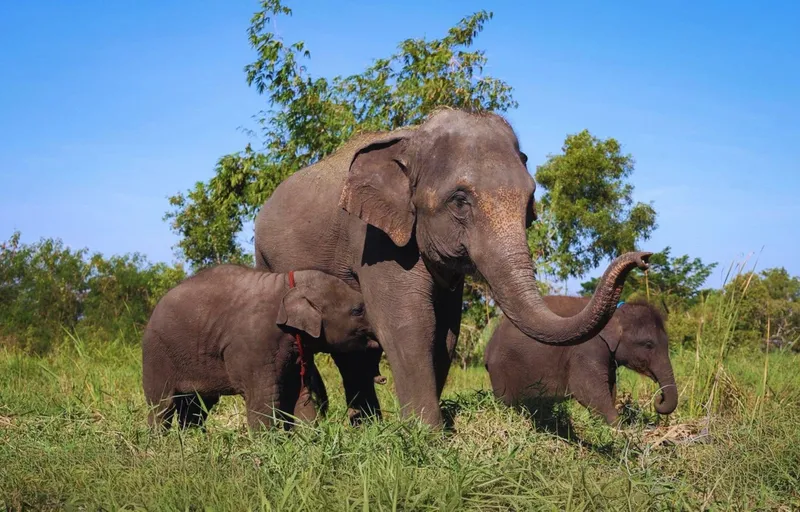
No riding, no chains, no bullhooks, no performance commands. Elephants move freely through open sanctuary grounds and interact with visitors on their own terms.
Supervised fruit-and-vegetable feeding session, elephant bathing at a natural water source, and an accompanied walk observing natural herd behavior in open terrain.
Elephant riding is not offered and not permitted. No shows, no tricks, no performances. This is by design — the absence of these activities is what makes this tour ethical.
Departing Bangkok in the early morning and returning in the late afternoon, giving you unhurried time with the elephants rather than a rushed photo stop.
Consistently rated among the highest-scoring ethical elephant experiences departing from Bangkok, with travelers specifically praising the welfare standards and guide knowledge.
Group sizes at this sanctuary are kept deliberately small to minimise stress on the elephants. Dates can fill weeks in advance, particularly during peak travel months. Check real-time availability for your travel dates.
What 'Ethical' Actually Means for Elephants in Thailand
Thailand is home to an estimated 3,800 captive elephants, and for most of the past century the dominant model for using them in tourism has been riding camps. To make a wild elephant compliant enough to carry tourists on a wooden saddle, it must first be broken through a process called phajaan — a systematic use of ropes, sleep deprivation, isolation, and physical pain designed to override the animal's instincts and establish human dominance. Bullhooks, metal-tipped rods used to jab and prod the skin, are the standard day-to-day management tool at these facilities.
The elephants you see giving rides or performing tricks are not naturally tame: they have been traumatized into compliance. This is not an activist interpretation — it is documented by veterinary researchers, wildlife organizations, and former mahouts who have left the industry.
- Phajaan (elephant breaking) is the process used at riding camps — ropes, sleep deprivation, and physical tools to override natural behavior
- Bullhooks (metal-tipped rods) are used daily at traditional camps to control elephants through pain and fear
- Riding saddles create spinal damage — elephant backs are not structurally designed for sustained weight-bearing
- Performance behaviors (painting, balancing, tricks) require the same foundational breaking process as riding
The Specific Standards at an Ethical Sanctuary
A genuine ethical sanctuary operates on a completely different principle: the elephant's capacity to refuse. At this sanctuary, there are no saddles on the premises, no bullhooks in the mahouts' hands, and no performance stages. Elephants move through open terrain at their own pace and choose when and how close to approach visitors.
The mahouts here manage relationships through voice commands built on years of trust and positive reinforcement — not through tools that cause pain.
- No riding — strict no-exceptions policy; no saddles exist on the property
- No chains — elephants are never restrained during visitor hours or at night in ways that cause distress
- Natural feeding — elephants choose when to approach feeding stations; visitors do not chase or corner them
- Herd interaction — elephants move as a social group with other herd members, not in isolation for tourist convenience
- Consent-based proximity — if an elephant moves away, visitors stay back; guides enforce this throughout the day
- No bullhooks — mahouts carry no coercive tools; all guidance is through trained voice cues
Why the Word 'Ethical' Has Been Diluted — and How to Verify It
The word 'ethical' in elephant tourism has been so widely adopted as a marketing term that it requires scrutiny. Facilities that advertise as sanctuaries sometimes still offer elephant yoga, painting performances, or rides on bare-back 'natural' saddles — all of which require the same foundational breaking process. The meaningful test is a simple one: can the elephant refuse interaction?
If the answer is yes — if the elephant can walk away and visitors must respect that — you are in a genuine sanctuary. If elephants are guided toward visitors at all times and never given space to disengage, the 'ethical' label is marketing, not practice. At this tour's sanctuary, elephants move freely and visitors follow only as far as the elephant permits.
- Red flag: 'natural bareback riding' — still requires phajaan breaking
- Red flag: elephant painting or soccer performances — unnatural behaviors require sustained training under coercion
- Red flag: elephant yoga — requiring postures causes physical strain and demands compulsion to achieve
- Green flag: mahouts carry no bullhooks on premises
- Green flag: elephants are observed in open terrain, not corralled toward visitors
- Green flag: visitors are told to stop and step back when an elephant moves away
What You'll Actually Do with the Elephants
Feeding Session — Fruits and Vegetables by Hand
The first hands-on activity is a supervised feeding session using fruits and vegetables prepared by the sanctuary team. You will stand within arm's reach of an Asian elephant — an animal that can weigh four tonnes — as it delicately uses the bristled tip of its trunk to accept sugarcane, bananas, or pumpkin from your outstretched hand. Your guide explains each elephant's dietary preferences, daily food requirements (up to 150 kilograms for a healthy adult), and which food items serve as treats versus staples.
There is no urgency to this session: you are not queuing for a thirty-second photo opportunity. You spend real time with each animal, learning their individual personalities and comfort levels with visitors.
Elephant Bathing in Natural Water
The bathing session takes place at a natural water source on the sanctuary grounds — a river or pond where the elephants wade in under no compulsion. You enter the water with them, helping to splash and scrub their mud-coated hides with buckets and soft brushes provided by the sanctuary. Flash photography is not permitted during this or any session near the elephants; the reason becomes immediately obvious when you are this close — flash startles them, and the guides explain this before you approach the water.
The session is chaotic, wet, and memorable: elephants at a genuine sanctuary respond to bathing with what can only be described as visible enjoyment.
- Waterproof bags or dry bags provided for phones and cameras during the bathing session
- Guests wade into natural water — wear clothes you don't mind getting wet
- No flash photography permitted near elephants at any point during the day
- Guides supervise positioning throughout — follow mahout guidance on safe distance and movement
Sanctuary Walk — Observing Natural Herd Behavior
In the afternoon, you accompany the elephants on a walk through the sanctuary's open terrain — jungle paths, riverside stretches, and open clearing areas. The mahouts give the elephants wide latitude in choosing their route and pace; you follow at a respectful distance rather than directing the movement. This is where you observe behaviors that simply do not exist at riding camps: elephants using their trunks to strip bark, communicating with low rumbles, navigating steep terrain with surprising agility, and pushing against trees to scratch areas their trunks cannot reach.
Your guide narrates throughout, contextualizing what you are watching within the broader behavior patterns of wild Asian elephants. The walk covers approximately two to three kilometers over sixty to ninety minutes.
- Closed-toe shoes required for the jungle walk — uneven terrain includes roots, loose soil, and slopes
- The pace is set by the elephants, not by a schedule — walks can slow significantly when elephants find food or water
- Natural behaviors observed include foraging, social communication, self-grooming, and herd positioning
- No posing the elephants for photographs — visitors photograph what the elephants naturally do
Sanctuary Distance from Bangkok and Getting There
The sanctuary is located outside Bangkok in a rural area of central Thailand, approximately 100 to 150 kilometers from the city center — a two- to two-and-a-half-hour drive by air-conditioned minivan. Hotel transfers are included in the tour price, with pickup from your Bangkok hotel confirmed after booking. Because there is no practical public transport option to rural sanctuaries from Bangkok, the included hotel-to-hotel transfer is a meaningful logistical inclusion that distinguishes this tour from alternatives where guests must arrange their own way to a meeting point.
The total return travel time of approximately five hours is factored into the eight-hour day duration.
Your Guide's Role Throughout the Day
This tour includes a dedicated English-speaking guide for the full day, not just a transfer driver who drops you at the gate. Your guide manages the relationship between the group and the mahouts, translates the elephants' individual rescue stories and behavioral cues, explains the welfare philosophy of the sanctuary in practical terms, and ensures that visitor behavior remains within the consent-based interaction model. Guide quality is frequently cited in reviews as a key reason why the experience feels educational rather than purely recreational.
The mahouts themselves have long-term relationships with individual elephants — some spanning more than a decade — and the guide's role includes translating those relationships for visitors in real time.
Your 8-Hour Day Itinerary
-
07:30
Hotel Pickup in Bangkok
Your air-conditioned minivan picks you up directly from your Bangkok hotel. The exact pickup time is confirmed after booking and may vary by hotel location within the city. Bring a light snack and water for the journey — the sanctuary provides refreshments on arrival.
-
10:00
Arrive at the Elephant Sanctuary
After approximately two to two-and-a-half hours on the road, you arrive at the sanctuary grounds. You are welcomed with a cold drink and a brief orientation session from your guide covering the day's schedule, the elephant welfare philosophy practiced here, and the behavioral guidelines visitors are asked to follow throughout the day.
-
10:20
Change Into Sanctuary Clothes
The sanctuary provides a change of dark-colored clothing — bright colors and loud patterns can unsettle elephants. You change into provided tops and stow personal bags in a secure area before approaching the herd for the first time.
-
10:30
Meet the Elephant Herd
Your guide and mahouts introduce the resident elephants from a respectful distance, allowing the animals to register the group's presence before anyone moves closer. Each elephant's name, rescue history, and current rehabilitation status is shared — you leave this introduction knowing the elephants as individuals, not as a backdrop. This session typically runs 45 to 60 minutes.
-
11:30
Supervised Feeding Session
Participate in the hand-feeding session using fruits and vegetables prepared by the sanctuary — sugarcane, bananas, pumpkin, and seasonal produce. Guides explain safe feeding technique and each elephant's preferences. The experience of a four-tonne animal delicately using its trunk tip to take food from your hand is one that most visitors describe as immediately and unexpectedly moving.
-
12:15
Elephant Bathing at Natural Water Source
Accompany the elephants to the sanctuary's natural water source for the bathing session. Wade in alongside them, help splash and scrub with buckets and brushes, and observe natural water behavior — elephants submerging, spraying themselves, and socializing in the water. Waterproof bags are provided for phones and cameras. No flash photography permitted.
-
13:00
Traditional Thai Lunch at the Sanctuary
A Thai buffet lunch is served at the sanctuary's open-air dining area — rice dishes, vegetables, soups, and fresh fruit. This is a relaxed break to compare notes with other travelers, ask your guide questions, and rest before the afternoon session.
-
14:00
Jungle Walk with the Herd
Follow the elephants through two to three kilometers of open sanctuary terrain, observing natural behaviors in forest and clearing settings. The mahouts guide the walk but give the elephants freedom to choose their route and pace. Closed-toe shoes are essential for this section — the terrain includes uneven ground, roots, and inclines. The walk typically runs 60 to 90 minutes.
-
15:30
Free Time and Farewell
Spend remaining time at the sanctuary revisiting the elephants, taking final photographs of natural behaviors, browsing the sanctuary's ethical merchandise area, or simply sitting quietly near the herd. Your guide is available for any remaining questions about the elephants or Thai elephant welfare more broadly.
-
16:00
Depart Sanctuary — Return Drive to Bangkok
Board the minivan for the return journey to Bangkok. The drive takes approximately two to two-and-a-half hours depending on traffic conditions. Drop-off is at your original Bangkok hotel.
Important Things to Know
What to Bring
The sanctuary provides a change of dark-colored clothing for the day, so focus your packing on comfort and practicality for a full outdoor day in Thailand's climate.
- Closed-toe shoes or sturdy sandals with ankle support — required for the jungle walk; flip-flops are not safe on uneven terrain
- Comfortable clothes you don't mind getting wet and muddy during the bathing session
- Sunscreen applied before arrival — reef-safe formulas preferred near natural water sources
- Insect repellent — particularly important during the jungle walk in the wet season (June through October)
- Camera without flash enabled — bring a dry bag or waterproof case for the bathing session
- Small day pack for personal items, sunscreen, and a water bottle during the walk
- Light rain layer or poncho if traveling during the monsoon season
Not Allowed
These rules exist to protect the elephants and are enforced by guides throughout the day. Non-compliance can result in removal from the sanctuary.
- Elephant riding — this sanctuary operates a strict no-riding policy; no exceptions for any visitor
- Sticks, bullhooks, or any implement brought near the elephants — do not bring any tool that could be used to prod or direct an animal
- Flash photography at any point near the elephants — flash startles them; this rule applies throughout the full day
- Offering personal food to elephants outside the supervised feeding session — do not bring fruit or snacks to share independently
- Chasing, following, or approaching an elephant that has moved away from the group
- Loud noise, sudden movements, or shouting near the herd — the sanctuary environment is calm and quiet by design
- Attempting to touch an elephant's face, eyes, or ears without explicit mahout guidance
Dress Code Around Elephants
Elephants respond to color and pattern. Bright colors — especially reds, oranges, and high-contrast patterns — can trigger wariness or startle responses. The sanctuary provides dark-colored tops for this reason, and visitors are asked to wear neutral or dark lower-body clothing as well.
Jewelry that dangles or catches light near the animals should be left in your day bag during herd interactions. Remove hats before approaching the elephants — mahouts will advise when to remove or replace head coverings based on each animal's individual comfort.
Who This Tour Is For
Best For
This tour is designed for travelers who specifically want a welfare-first elephant experience and are prepared to prioritize the animals' comfort over staged photo opportunities. It consistently attracts a particular type of traveler.
- Animal welfare-conscious travelers who have researched elephant tourism and want verified no-riding, no-chains alternatives
- Families with children aged five and older — the rescue stories, feeding session, and bathing experience create lasting impressions for younger visitors
- Solo travelers — the small group format and full-day structure make it easy to connect with guides and fellow travelers
- Couples looking for a meaningful shared experience beyond standard city sightseeing
- Travelers who have already visited a riding camp in a previous trip and are looking for a fundamentally different experience
- Wildlife photographers interested in capturing natural elephant behavior in an unhurried, consent-based setting
Not Suitable For
The day involves genuine physical activity and outdoor exposure. A small number of situations make this tour unsuitable.
- Pregnant women — the jungle walk involves uneven ground and physical activity not recommended during pregnancy; please consult your physician before booking
- Individuals with significant mobility limitations — the jungle walk and water bathing session require the ability to navigate uneven terrain and wade through shallow natural water
- Children under five years old — the proximity to large animals, the length of the day, and the physical demands of the activities are not appropriate for very young children
- Travelers who expect elephant riding or performance shows — if that is what you are looking for, this tour is not the right fit; these activities are intentionally absent
Frequently Asked Questions
Why choose an ethical elephant tour instead of a traditional riding camp?
Traditional riding camps require elephants to be broken through phajaan — a process using ropes, sleep deprivation, and painful tools to override an elephant's natural instincts and make it compliant for human commands. Bullhooks are used daily for ongoing control. The elephants giving rides or performing tricks have been systematically traumatized. An ethical sanctuary operates without any of this: no riding means no back saddles pressing on spines not designed for sustained weight-bearing; no bullhooks means mahouts build relationships through trust rather than pain; no performances means no unnatural behaviors enforced through fear. You are spending the day with elephants that have been rescued from those conditions, observing animals that are as close to their natural selves as captivity permits. The experience is also more emotionally honest — you watch elephants do what elephants actually do, rather than what they have been forced to do.
What makes this tour different from the ethical full-day Living Green Elephant Sanctuary day trip from Bangkok?
Both tours visit ethical elephant sanctuaries with no-riding, no-bullhook policies, but this tour differentiates itself on two practical dimensions. First, hotel transfers are explicitly included — your pickup is from your Bangkok hotel door, removing any logistics around getting to a meeting point. Second, this tour's name itself signals the welfare-first positioning: the word 'ethical' is in the title, which means the sanctuary's credentials on this front are the primary selling point rather than a secondary feature. Travelers who specifically want to understand and engage with the ethical dimension of the experience — the welfare philosophy, the rescue histories, the specific standards that separate this facility from marketing-only 'sanctuaries' — tend to find this tour's framing and guide approach particularly well-matched to that interest.
Is the 'ethical' label verified or just marketing?
The practical verification is in what is absent from the premises: no riding saddles, no performance stages, no bullhooks in the mahouts' hands, no corralling equipment used to herd elephants toward visitors. These are physical facts you can observe within the first thirty minutes of arriving. The 4.8-star rating from 966 independent travelers is also a meaningful signal — reviews consistently describe mahouts carrying no coercive tools, elephants moving freely and being permitted to disengage from visitors, and an absence of the performance infrastructure that characterizes facilities where 'ethical' is only a marketing term.
How far is the sanctuary from Bangkok and is transport really included?
The sanctuary is approximately 100 to 150 kilometers from central Bangkok — a two- to two-and-a-half-hour drive. Round-trip hotel transfers from your Bangkok accommodation are included in the $64 tour price. Your exact pickup time and location are confirmed after booking based on your hotel's location within the city. There is no public transport option to rural elephant sanctuaries from Bangkok, making the included hotel-to-hotel transfer a practical necessity that this tour covers. Drop-off at your hotel at the end of the day is also included.
What other experiences can I combine with this in Bangkok?
The elephant sanctuary occupies a full day, so you will want to plan it as a standalone day in your Bangkok itinerary. For the days before or after, Bangkok offers river tours, temple complexes, street food experiences, cooking classes, and Muay Thai evenings. For a complete picture of what is available, visit our Bangkok Thailand Tours page.
What Travelers Are Saying
I spent a long time researching elephant experiences in Thailand before this trip because I'd read too much about what goes on at riding camps. This tour was the first one where the 'ethical' label held up entirely from the moment we arrived. The mahouts carried nothing in their hands. The elephants moved wherever they wanted. When one of them walked away from our group during the feeding session, the guide simply said 'she's had enough for now, we'll give her space' — and that was that. Nobody chased her for a photo. We hand-fed the others, got completely soaked in the bathing session, walked through jungle for an hour watching these animals just exist on their own terms. The hotel pickup made the logistics genuinely easy. This was the most meaningful three hours I've had with any animal, anywhere.
My teenage daughter had specifically asked if we could avoid riding elephants after she'd done some research before our trip. Finding this tour answered that in the most complete way possible. The guide spent the first thirty minutes explaining exactly what makes this sanctuary different — not in a lecture-y way, but through the stories of each elephant: where they came from, what their previous life looked like, how long they'd been here. By the time we started the feeding session, my daughter was already emotional. She's fourteen and not easy to impress. The bathing was chaotic and wonderful and by the end of the jungle walk she was asking the guide how she could support the sanctuary after going home. Hotel pickup was seamless — driver was outside our hotel right on time.
We booked this specifically because the hotel transfers were included and we were staying outside the main tourist area. The pickup was exactly as described — on time, air-conditioned van, friendly driver who explained what to expect. The sanctuary itself delivered completely on the ethical claims: no saddles anywhere, no hooks, mahouts who clearly had deep individual relationships with specific elephants. I watched a mahout spend ten minutes just sitting near one elephant who seemed unsettled, not trying to move her or interact, just being present. That kind of patience is not something you teach in a week. The feeding session, the bathing, the walk — all of it was slower and more real than I expected. 4.8 stars is accurate. I'd have given it more.