Bangkok Tuk Tuk Adventure: Chinatown, Michelin Food & Temples — 3.5 Hours for $55 (2026)
The Bangkok tuk tuk adventure through Chinatown, Michelin-recognised street food stalls and riverside temples is the most exhilarating 3.5 hours you can spend in Thailand's capital: an open-sided tuk tuk weaves through the neon chaos of Yaowarat Road while your guide steers you toward the dishes that earned Bib Gourmand recognition and the temple courtyards that most tour groups skip entirely. Rated 4.8 stars across 623 independent reviews, this evening tour combines genuine transport excitement with Bangkok's most celebrated culinary district. Everything you need to know is below — or explore all bangkok thailand tours to compare every experience available in the city.
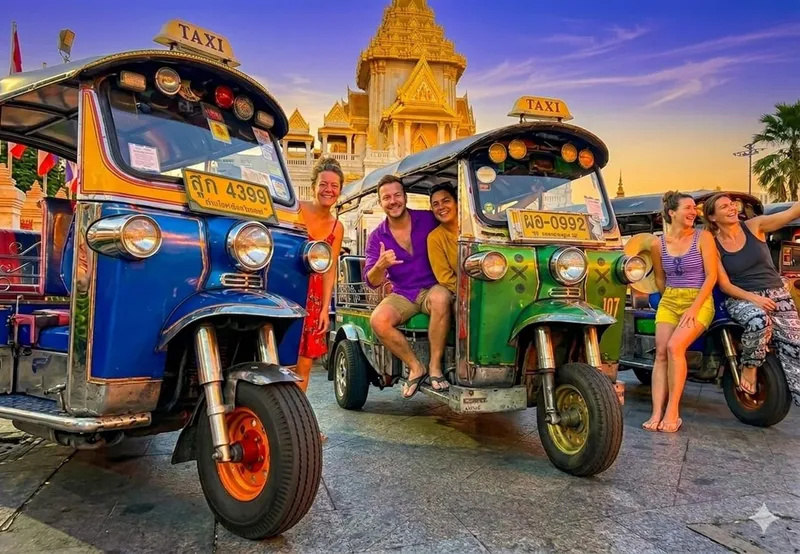
About This Activity
Cancel up to 24 hours before — full refund guaranteed
Authentic three-wheeled tuk tuk transport throughout the tour
Evening tour starting around 18:00 in Chinatown
Stalls and eateries recognised by the Michelin Guide Thailand
Visit hidden temples in and around the Chinatown district
One of Bangkok's top-rated evening food and culture tours
Check Live Availability & Prices
Real-time dates and pricing — free cancellation up to 24 hours before departure.
Chinatown (Yaowarat) — Bangkok's Most Electric District After Dark
A 150-Year-Old City Within a City
Bangkok's Chinatown — known as Yaowarat after the road that runs through its heart — was established by Teochew Chinese immigrants in the late 18th century. King Rama I relocated the community from the original settlement near the Grand Palace site, and the neighbourhood they built along the Chao Phraya riverbank has barely paused for breath since. Today Yaowarat is the engine room of Bangkok's Chinese-Thai culinary identity: a dense, layered, occasionally overwhelming kilometre of shophouses, gold traders, street food carts, and Buddhist-Taoist temples that somehow manage to coexist at full volume at every hour of the day.
What changes after sunset is the atmosphere. The gold dealers lower their shutters. The folding tables come out. The charcoal grills ignite. And Yaowarat Road transforms into one of the most alive stretches of city in Southeast Asia — tuk tuks threading through diners who have pulled chairs into the road, the smell of charcoal and five spice and sesame oil layered into something almost visible in the warm evening air.
- Yaowarat Road: Bangkok's most concentrated food corridor, at its best between 18:00 and 22:00
- Teochew Chinese culinary tradition preserved across six generations of Bangkok families
- Michelin Guide Thailand has recognised multiple establishments in and around Yaowarat
- Three significant temples within walking distance — rarely included on standard Chinatown tours
- A local guide is essential: the best stalls are hidden in lanes tourists never enter alone
Why a Tuk Tuk Changes Everything
Yaowarat on foot is extraordinary. Yaowarat by tuk tuk is something else entirely. The open-sided three-wheeler puts you at street level with no glass between you and the city — you feel the heat from the charcoal grills, smell each stall as you pass it, and hear the city at full volume. The tuk tuk is not simply transport on this tour: it is the lens through which Bangkok reveals itself.
The practical advantage is range. A walking food tour stays within a few hundred metres of Yaowarat Road. A tuk tuk tour can cover the full Chinatown district, dip into the quieter temple lanes to the south, and reach riverside viewpoints that are too far on foot from the main food strip. In 3.5 hours you see significantly more of this neighbourhood than any walking-only format allows.
Michelin Bib Gourmand Street Food Stops
What the Michelin Bib Gourmand Means in Bangkok
The Michelin Bib Gourmand designation — awarded to establishments offering exceptional food at moderate prices — has been given to a remarkable number of Bangkok street food vendors and shophouse restaurants since the Michelin Guide Thailand launched in 2018. In Yaowarat, this recognition has landed on stalls that have been operating from the same location for decades, serving dishes refined to near-perfection over generations.
On this tour, your guide stops at stalls and eateries that have received Michelin recognition or are considered by local food writers to be at that standard — places that appear in international food media, that Bangkok residents make deliberate journeys to visit, and that consistently produce dishes worth the effort of finding them in the chaos of Chinatown's side lanes.
The Dishes You Will Eat
The specific stalls visited vary slightly by night depending on fresh produce availability and seasonal specials, but the tour consistently features several key Yaowarat dish categories.
- Oyster omelette (hoy tod): crispy-edged rice flour omelette packed with fresh oysters or mussels, cooked in a carbon-black wok over fierce heat — the signature Yaowarat dish and a fixture on this tour
- Dim sum from a family-run shophouse kitchen: har gow (shrimp dumplings), char siu bao (barbecue pork buns), and pan-fried dumplings made fresh throughout the evening
- Braised duck on rice (khao na ped) from a decades-old Teochew braise shop — dark soy, five spice, and star anise over jasmine rice
- Mango sticky rice using Nam Dok Mai mangoes at peak ripeness, served with freshly pressed coconut cream
- Sesame balls (jian dui): deep-fried glutinous rice dough with lotus or black sesame filling, eaten hot from the fryer
- Thai iced tea (cha yen) as a palate reset between heavier dishes — sweet-spiced black tea over ice with condensed milk
Temples Visited on the Tour
Wat Mangkon Kamalawat (Dragon Lotus Temple)
The largest and most important Chinese Buddhist temple in Bangkok, Wat Mangkon Kamalawat sits a few hundred metres from Yaowarat Road on a lane that most visitors walk past without noticing the entrance. The temple was founded in 1871 and remains actively used by Bangkok's Chinese community for daily worship, festival ceremonies, and ancestral rites. At dusk — the time this tour typically arrives — incense smoke from the main hall drifts into the lane outside and the interior is lit by hundreds of red lanterns.
Your guide explains the Mahayana Buddhist iconography inside and points out the elements that distinguish Chinese Buddhist temples from their Thai Theravada counterparts nearby: the multi-tiered decorative roof with ceramic dragon figures, the arrangement of bodhisattva statues, and the ceremonial incense urns that burn continuously throughout the year.
Wat Traimit — Temple of the Golden Buddha
Wat Traimit houses the world's largest solid gold Buddha image — a three-metre, 5.5-tonne statue of pure gold discovered accidentally in the 1950s when a plaster exterior cracked during a move, revealing solid gold beneath. The temple sits at the eastern gate of Chinatown where Yaowarat Road meets Charoen Krung Road, and the tuk tuk ride to reach it from the deep lanes of Yaowarat is itself a highlight — threading through the Friday evening traffic with the gold temple tower visible above the rooftops.
The fourth-floor museum explains the history of Chinatown and the remarkable story of how the image came to be coated in plaster — likely to hide it from Burmese invaders — and remained concealed for two centuries. This stop takes approximately 20 minutes and requires temple-appropriate clothing (see dress code rules below).
Smaller Shrines and Taoist Temples
Between the major temple stops, your tuk tuk passes and briefly stops at several smaller Taoist shrines tucked between shophouses along Yaowarat's side lanes. These neighbourhood shrines — some barely wider than a single doorway — are decorated with vivid red-and-gold altar pieces, incense coils suspended from the ceiling, and fresh offerings of fruit and flowers placed by local residents each morning. They are rarely mentioned in guidebooks but represent the most authentic surviving layer of everyday religious life in Bangkok's Chinese community.
The Tuk Tuk Experience — What to Expect
Bangkok's Most Iconic Vehicle
The tuk tuk is a three-wheeled motorised vehicle with a small enclosed cab for the driver and an open-sided rear bench for passengers. The name comes from the sound of its two-stroke engine — a persistent tuk-tuk-tuk at idle that intensifies to a mechanical roar at speed. Bangkok has run on tuk tuks since the 1960s, when they replaced bicycle rickshaws as the city's short-distance urban transport.
Modern tuk tuks are faster and cleaner than their reputation suggests. On this tour, the vehicles are maintained to a higher standard than the average street tuk tuk — they are the operator's own fleet, inspected regularly, and driven by guides who know the Chinatown lanes well enough to find parking in spaces that seem physically impossible to reach. Passengers sit two or three to the rear bench, facing forward, with a clear view of the city unfolding ahead.
The Ride Itself
The sensation of riding a tuk tuk through evening Bangkok is genuinely difficult to replicate in any other vehicle. Sitting low and open to the air at the height of the city's street life, you are at eye level with vendors, at nose level with the charcoal stalls, close enough to the roadside shrines to see the candle flames flicker as you pass. When the driver accelerates onto an open stretch of road the warm city air hits you all at once. When he brakes sharply to avoid a motorcycle courier your guide laughs and points to something worth photographing on the left.
This is emphatically not a sanitised, air-conditioned sightseeing bus experience. The tuk tuk puts Bangkok directly onto your skin, and after 3.5 hours in one you will understand the city's street-level energy in a way that no enclosed vehicle permits.
3.5-Hour Evening Itinerary — Bangkok Tuk Tuk Adventure
-
18:00
Meet your guide and tuk tuk at the Chinatown meeting point
Group assembles near the Odeon Clock Tower at the eastern end of Yaowarat Road — the landmark arch that marks Chinatown's main entrance. Your guide introduces the evening plan, explains the tuk tuk safety protocol (stay seated, keep limbs inside the vehicle), and gives a brief context on Yaowarat's history before the engine fires and you set off into the early evening traffic.
-
18:15
First food stop — dim sum shophouse kitchen
The tuk tuk parks in a Chinatown side lane and the group enters a family-run dim sum kitchen that has been operating from the same shophouse since the 1970s. Freshly steamed har gow (shrimp dumplings) and char siu bao (barbecue pork buns) are ordered at the kitchen window. Your guide explains the Teochew Chinese origins of Bangkok's dim sum tradition while the kitchen steams your order to order.
-
18:45
Tuk tuk ride through central Yaowarat — neon at full intensity
The prime Yaowarat experience: your driver takes the tuk tuk down the full length of Yaowarat Road at the precise hour when the street reaches peak energy. Gold shop shutters are coming down, street food carts are fully deployed, the neon signs are lit, and the pavement belongs to diners as much as pedestrians. Your guide narrates the history visible from the tuk tuk without stopping — moving commentary at 20 km/h through one of Bangkok's most visually dense streets.
-
19:05
Oyster omelette (hoy tod) stop
Stop at the guide's preferred Yaowarat hoy tod stall — consistently singled out in reviews as one of the evening's best dishes. Watch the cook work a carbon-black wok over heat that would clear most residential kitchens, then eat a crispy oyster omelette with sriracha sauce while standing at the stall. This is Bangkok Chinatown street food in its most elemental form.
-
19:30
Wat Mangkon Kamalawat — Dragon Lotus Temple
The tuk tuk arrives at the entrance lane of Bangkok's largest Chinese Buddhist temple. The group explores the main hall at the most atmospheric time of day — incense smoke, red lanterns, and the sound of evening prayer rituals. Your guide explains the Mahayana iconography and the significance of the temple to Bangkok's Chinese community before leading the group back to the tuk tuks.
-
20:00
Braised duck on rice and Michelin-recognised shophouse
Dinner stop at a Teochew braise shop with decades of continuous operation behind it. Dark-soy braised duck over jasmine rice with a bowl of fish maw soup — the two signature dishes of Yaowarat's Chinese-Thai culinary heritage, at one of the establishments the Michelin Guide Thailand has taken note of. Your guide orders in Thai and the food arrives fast.
-
20:35
Wat Traimit — the Golden Buddha
The tuk tuk delivers the group to Wat Traimit at the eastern gate of Chinatown. A brief visit to see the 5.5-tonne solid gold Buddha image on the third floor and the fourth-floor museum explaining Chinatown's history and the remarkable discovery of the gold image beneath its plaster exterior. Twenty minutes here; temple dress code applies.
-
21:00
Dessert and tour close — mango sticky rice and sesame balls
Final food stop at a street dessert vendor near the Odeon Clock Tower: fresh mango sticky rice with Nam Dok Mai mango and coconut cream, followed by hot sesame balls from a fryer stall. Eat the sesame balls immediately. The tour concludes at the meeting point; your guide suggests options for continuing the evening independently across the city.
Important Things to Know Before You Go
What to Bring
- Comfortable closed-toe shoes — Yaowarat's side lanes have uneven pavements and occasional puddles near food stalls; open sandals are not ideal for 3.5 hours of on-and-off tuk tuk travel
- Loose, breathable clothing in a neutral or light colour — Bangkok evenings are warm and humid, and tuk tuk travel amplifies wind and exhaust exposure
- Temple-appropriate cover-up: shoulders and knees must be covered inside both Wat Mangkon and Wat Traimit — a light cotton scarf or sarong that packs into a bag is ideal
- Small cash in Thai Baht (200–400 THB) for any additional food or drinks you want beyond what is included on the tour
- Phone fully charged — Yaowarat at night is among Bangkok's most photogenic environments and the tuk tuk ride produces excellent motion shots
- Hand sanitiser — standard practice for a multi-stop street food evening
Not Allowed
- Sleeveless tops, shorts, or skirts above the knee inside temple buildings — the guide will advise if your clothing is not suitable before entry, but covering up before arrival avoids delay for the whole group
- Photography of individual stall vendors or kitchen staff without asking permission first — always check with the guide before pointing a camera at vendors working in close quarters
- Large backpacks or wheeled luggage on the tuk tuk — storage space is limited; small day bags only
- Alcohol consumption during the tour — food stops are street stalls and shophouse kitchens, not bars; please arrive sober and keep consumption for after the tour ends
Who This Tour Is For
Best For
- First-time Bangkok visitors who want to combine transport excitement, street food eating, and temple sightseeing in a single efficient evening
- Food travellers drawn specifically to Bangkok's Michelin-recognised street food scene and who want a guided route through stalls they would struggle to find alone
- Couples looking for a kinetic, sensory Bangkok evening that is genuinely different from a restaurant dinner or a standard bus tour
- Photographers: the tuk tuk at speed through neon-lit Chinatown, the temple incense smoke, and the charcoal stall work light all produce exceptional images
- Travellers who have done Bangkok's main sights before and want to go deeper into Chinatown's food and religious culture on a return visit
Not Suitable For
- Guests with severe seafood or shellfish allergies — fish sauce, shrimp paste, and fresh oysters feature prominently in the food stops; the cooking environment makes cross-contamination impossible to guarantee
- Travellers who are uncomfortable in open vehicles in city traffic — the tuk tuk is not enclosed and Bangkok traffic is dense; if you are anxious in open motorised vehicles, this tour may be stressful rather than enjoyable
- Very young children (under 5) — the tuk tuk engine noise, evening heat, and 3.5-hour duration without structured rest stops are not well-suited to toddlers or very young children
- Guests unable to step in and out of a low vehicle multiple times across the evening — tuk tuk boarding requires stepping up approximately 30 cm with no assist handle on most vehicles
Bangkok Tuk Tuk Adventure — Frequently Asked Questions
What is included in the Bangkok tuk tuk tour price of $55?
The $55 per person price includes all tuk tuk transport throughout the 3.5-hour tour, a local English-speaking guide, all food stops featured in the itinerary (dim sum, oyster omelette, braised duck on rice, mango sticky rice, and sesame balls), temple entry fees, and GetYourGuide's standard free cancellation protection. Additional drinks or food beyond the included stops are not covered — bring 200–400 THB in Thai Baht for anything extra.
What does Michelin Bib Gourmand mean and which stops on this tour qualify?
The Michelin Bib Gourmand is awarded to restaurants and street food stalls that offer 'good quality, good value cooking' — exceptional food at moderate prices. The Michelin Guide Thailand, launched in 2018, has recognised numerous Yaowarat establishments in this category. On this tour, the guide visits stalls and shophouse kitchens that have received Bib Gourmand recognition or are considered equivalents by Bangkok's food media community. The specific stalls are not published by the operator to avoid crowding — the guide selects based on quality that evening.
Is the tuk tuk ride safe?
Yes. The operator uses a maintained fleet of tuk tuks driven by experienced guides who navigate Chinatown daily. Passengers sit on the rear bench facing forward with a clear sightline; the guide travels with you rather than separately. Standard safety practice applies: remain seated at all times, keep arms and bags inside the vehicle, and follow the driver's instructions at traffic stops. Bangkok tuk tuks are significantly slower in dense evening traffic than their reputation suggests — most of the ride through Chinatown is at 15–25 km/h.
Do I need to cover up for the temple visits?
Yes. Both Wat Mangkon Kamalawat and Wat Traimit require covered shoulders and knees inside the temple buildings. The tuk tuk tour visits these temples in the evening, so long trousers, a long skirt, or a light cotton top with sleeves covers the dress code. Bring a scarf or sarong that packs into your bag if you are wearing shorts or a sleeveless top — you can put it on for the temple stops and remove it when you return to the tuk tuk. The guide will remind you before each temple entry.
What other Bangkok tours combine food and culture in the evenings?
The tuk tuk adventure is one of the most comprehensive evening formats available in the city, but Bangkok offers a wide range of evening experiences for different interests. Night river cruises combine dinner with temple and skyline views from the Chao Phraya. Walking food tours of Yaowarat focus exclusively on eating without the tuk tuk element. Canal tours by longtail boat are available at dusk. Browse all bangkok thailand tours to compare evening options by format, district, and price and find the best fit for your nights in the city.
What Travellers Say About This Bangkok Tuk Tuk Tour
The tuk tuk ride through Chinatown at night is something I will never forget. Our guide knew every vendor by name, took us down lanes I would never have found on my own, and the food at the Michelin stops was absolutely outstanding. The oyster omelette was worth the entire trip to Bangkok on its own. Book this — it is the best evening in the city.
We did this on our last night in Bangkok and wished we had booked it first. The tuk tuk format means you cover much more ground than a walking tour — temples, food stalls, neon-lit Yaowarat Road at full speed. The guide was exceptional: knowledgeable, funny, and genuinely passionate about Chinatown's food culture. The braised duck was the best thing I ate in Thailand.
I came specifically for the Michelin stops and was not disappointed. The guide explained the Bib Gourmand designation and what it means in the Bangkok context, then took us to stalls that I had read about in food media but could never have located myself. The tuk tuk ride through the evening traffic is terrifying and wonderful in equal measure. Absolute highlight of our two weeks in Southeast Asia.