Bangkok Tuk Tuk & Longtail Boat Tour: Canals, Temples & Hidden Lanes
Most visitors choose between a tuk tuk tour OR a longtail canal tour. This one gives you both. In 3.5 hours you zip through Bangkok's old city streets by tuk tuk, duck into residential lanes that no tour bus can reach, visit a riverside temple, then transfer to a longtail boat and cut through the klong network on the Thonburi side of the Chao Phraya. It is the most efficient way to cover Bangkok's two most iconic transport experiences in a single morning. Rated 4.9★ across 104 reviews, it is a newer addition to the Bangkok Thailand tours scene — and already one of the highest-rated combos available.
- 4.9★, 104 reviews
- 3.5 hours
- Tuk Tuk + Longtail Boat
- Hidden canals
- Free cancellation
What Is the Bangkok Tuk Tuk & Longtail Boat Combo Tour?
This is one of the few Bangkok Thailand tours that combines both of the city's most famous transport icons — the three-wheeled tuk tuk and the roaring longtail boat — in a single, seamless 3.5-hour experience. You cover the city from two angles: the narrow land lanes that criss-cross the old city, and the ancient klong network that once carried all of Bangkok's trade and daily life.
Ride through Bangkok's old city lanes, past temples, local markets and residential alleys that are too narrow for any tour bus — and too slow-moving to see from a taxi.
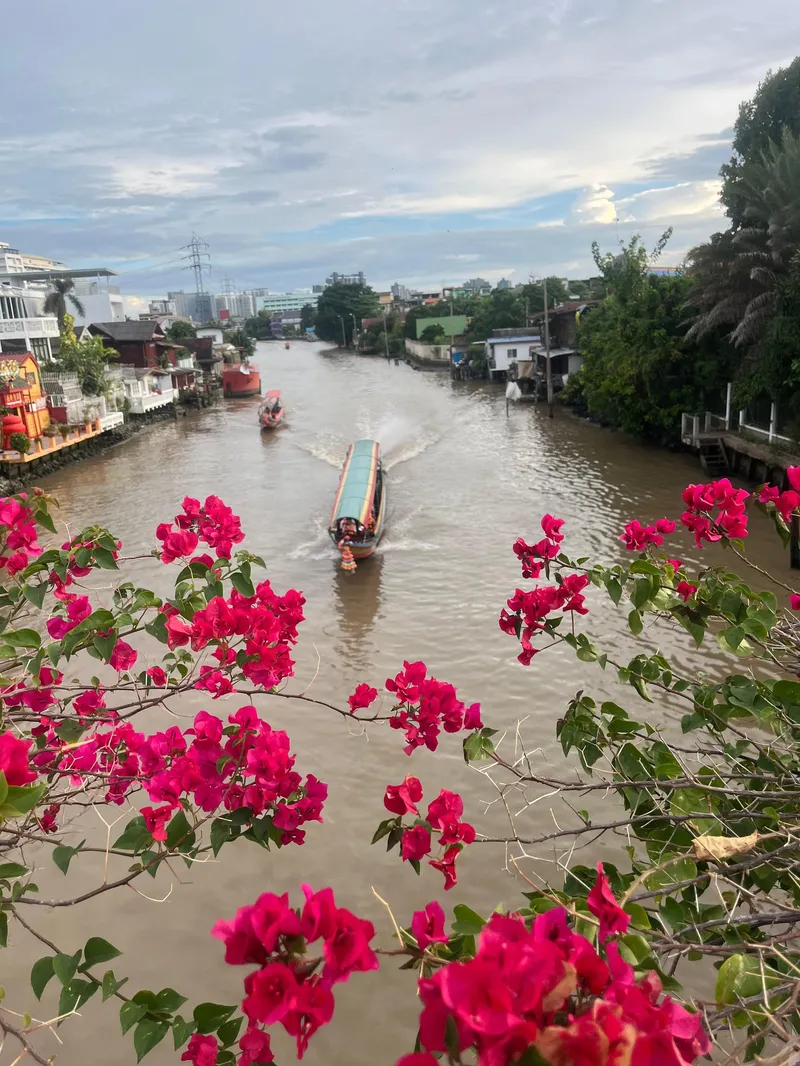
Board a traditional longtail boat and cut through the Thonburi khlongs — Bangkok's surviving canal network where riverside communities still live as they did a century ago.
The tour stops at riverside and canal-side temples along the route. Exact temples vary by departure, but typically include at least one major Thonburi temple.
The tuk tuk portion deliberately avoids the main tourist roads and cuts through residential sois (lanes) that most visitors never see — giving a genuine neighbourhood perspective.
At three and a half hours this tour moves at a comfortable pace — long enough to soak in the canal atmosphere and explore temples properly, short enough to free up your afternoon.
With 104 reviews and a 4.9-star average, this is one of the highest-rated combo tours currently operating in Bangkok — a newer tour that has quickly built a reputation for exceptional quality.
Check Availability — Bangkok Tuk Tuk & Longtail Boat Tour
The Tuk Tuk Portion — Streets, Temples and Hidden Sois
The tour begins on land. Your guide hails one of Bangkok's iconic three-wheeled tuk tuks — open-sided, surprisingly nimble, and powered by a small engine that produces a sound somewhere between a lawnmower and a racing motorbike. The first thing you notice is that the tuk tuk goes where cars cannot.
It threads through sois (side lanes) barely wide enough for two vehicles to pass, cuts behind temple walls, and pulls up at spots with no kerb or parking — places a standard taxi simply wouldn't stop.
Old Bangkok Lanes and Neighbourhood Life
The tuk tuk segment covers the older parts of the city — the Rattanakosin area and the Thonburi bank — where Bangkok's historic street grid still follows the pre-motor-vehicle logic of canal and footpath. Streets here are narrow, shaded by trees and lined with shophouses selling everything from fresh jasmine garlands to spare motorcycle parts. The guide points out neighbourhood spirit shrines, century-old bakeries, and the small details of daily Bangkok life that you would walk straight past without context.
- Street food stalls that open only in the early morning
- Residential sois where monks collect alms at dawn
- Canal-side lanes connecting the street grid to the water
- Local markets serving the surrounding neighbourhood, not tourists
Temple Stops Along the Route
The tuk tuk portion includes at least one temple stop. Rather than queueing at the most-visited Grand Palace complex, this tour tends to visit Thonburi-side temples — Wat Prayurawongsawat, smaller riverside wats — which receive far fewer visitors and where you can explore at a relaxed pace. Your guide explains the architecture, the religious significance of particular shrines, and how each temple fits into Bangkok's history.
Dress requirements apply: shoulders and knees must be covered (or use the wraps provided).
The Longtail Boat Portion — Klongs, Canal History and What the Ride Is Like
Bangkok's Canal Heritage
Before Bangkok had roads, it had canals. When King Taksin founded Thonburi as the Thai capital in 1767, the city was deliberately built around an existing klong network — the canals were its highways, marketplaces and borders simultaneously. The Rattanakosin period that followed on the opposite bank continued the same pattern: new klongs were dug to drain the marshy delta land and connect the royal palace to the river.
At its peak, Bangkok had over 1,000 kilometres of navigable waterways, earning it the European nickname "Venice of the East". Road-building through the twentieth century buried most of them. The Thonburi klongs you will explore on this tour are among the last significant networks still in active daily use by local residents.
The Klongs You'll Travel
The longtail boat portion concentrates on the Thonburi side — the quieter, older bank of the Chao Phraya that most tourists skip entirely. The main arteries here are Khlong Bangkok Noi and Khlong Bangkok Yai, historically used by royal barges, now used by commuter boats and local ferries. From these you branch into narrower community canals — some barely wide enough for two boats to pass — where wooden houses on stilts lean over the water and residents conduct their morning routines within arm's reach of passing boats.
- Khlong Bangkok Noi — the historic royal barge canal, now home to canal-side villages
- Khlong Bangkok Yai — the wider Thonburi artery connecting to the Chao Phraya
- Narrow community klongs where daily canal life is most intact
- Riverside stretches with views back across to the Bangkok skyline
What the Longtail Boat Ride Actually Feels Like
A longtail boat is a narrow wooden vessel — usually four to six metres long — powered by a repurposed truck or car engine mounted on a long, steerable shaft that extends behind the stern. The noise is considerable. The speed is startling. When the captain opens the throttle on an open stretch the bow lifts and the spray begins. In the narrow klongs he cuts the engine back and the boat glides almost silently between the houses, close enough to read the labels on items drying on a clothesline.
The contrast between the fast open-water sections and the slow, intimate canal passages is what makes the longtail experience memorable. You are never quite a tourist and never quite not one — the canal communities are used to boats passing, residents wave or ignore you with equal casualness, and the sense of moving through a functioning neighbourhood rather than a staged attraction is consistently striking.
Hidden Lanes: The Streets Only Locals Use
One of the distinguishing features of this combo tour — compared to a standard tuk tuk ride or a straightforward canal cruise — is the deliberate focus on the residential in-between spaces. The guide chooses routes through sois that connect the tuk tuk streets to the canal embankment: narrow, unpaved or cracked-concrete lanes that thread behind temple compounds and between housing blocks.
- Back lanes behind Thonburi temples away from any tourist route
- Canal embankment paths accessible only on foot or by small vehicle
- Neighbourhood market lanes open in the early morning hours only
- Shortcut sois where tuk tuk drivers know to squeeze through
These lanes are not on any map tourist board. They are the routes that delivery riders, monks, school children and canal ferry passengers actually use. The guide's knowledge of them — which ones are passable, which connect to the next canal pier, which have something worth pausing at — is the part of this tour that cannot be replicated by a solo walk or a rideshare app.
Tour Itinerary — Step by Step
-
Start
Meeting Point and Tuk Tuk Briefing
Meet your guide at the designated central Bangkok meeting point (confirmed at booking). The guide explains the day's route, introduces the tuk tuk driver, and answers any questions before departure. The tuk tuk is ready and waiting — no long check-in process.
-
Segment 1
Tuk Tuk Through Old City Lanes
Board the tuk tuk and head into the old city. The route cuts through residential sois and neighbourhood lanes, passing local markets, spirit shrines and canal-side shophouses. The guide provides running commentary on the neighbourhoods you pass through and the history behind what you see.
-
Stop 1
Temple Visit on the Route
The tuk tuk stops at a Thonburi-side temple for a proper visit — not a drive-by photo stop. The guide explains the temple's history, the significance of key structures within the compound, and the role of Buddhist temples in Bangkok neighbourhood life. Shoulders and knees must be covered; wraps are available if needed.
-
Segment 2
Hidden Residential Lanes to the Canal
Back in the tuk tuk, the route now heads toward the canal network via the lanes that connect the old city street grid to the waterfront. These narrow passages — some barely wide enough for a tuk tuk — give a perspective on how the land and water sides of old Bangkok interlock.
-
Transfer
Board the Longtail Boat at the Pier
At the canal pier the tuk tuk portion ends and the boat portion begins. Your guide boards the longtail with you. Life jackets are provided and the guide explains basic safety before departure. The captain fires the engine and you pull away from the pier into the canal.
-
Segment 3
Longtail Boat Through the Thonburi Klongs
The boat heads into the klong network. You move between wide arterial canals and narrow community waterways, passing canal-side temples, floating vendors, wooden houses on stilts, and monks collecting alms by boat. The guide points out landmarks and explains the canal community's way of life.
-
End
Return to Starting Point
The boat returns to the pier and the tour concludes approximately 3.5 hours after it began. The guide assists with directions to your next destination. Many guests continue to Wat Pho or the Grand Palace, both a short taxi ride away.
Important Things to Know
What to Bring
- Light, breathable clothing — Bangkok mornings are warm and humid even at 8:00 a.m.
- Covered shoulders and knees for temple visits (or request a wrap at check-in)
- Comfortable closed-toe shoes or sandals with a strap — flip-flops can slip on wet boat surfaces
- Sunglasses and a hat — the open canal stretches have no shade
- Sunscreen applied before departure (not to be applied on the boat near the water)
- A small dry bag or zip-lock for your phone — canal spray is light but real
- Cash for any optional purchases at canal-side stops (Thai baht preferred)
Not Allowed
- Standing up in the longtail boat while the engine is running
- Leaning over the side of the boat while at speed
- Feeding animals at temple stops without guide approval
- Photography inside temple prayer halls without the guide's confirmation that it is permitted
- Alcohol consumption during the tour
Safety on the Longtail Boat
Life jackets are provided for all passengers and must be worn throughout the boat portion of the tour. The captain is an experienced klong guide who has operated these vessels for many years — the boats are louder and faster than they look, but the routes are well-practised and genuinely safe when passengers follow the guide's instructions.
- Wear the life jacket at all times — it is lightweight and will not restrict movement
- Keep limbs inside the boat when passing under low bridges (the guide will warn you)
- Expect light spray on open canal sections — hold your phone securely
- If you feel unwell on the boat, signal your guide immediately — the captain can reduce speed or pull over
- Children must sit between adults, not on the outer edge of the bench seating
Who This Tour Is For
Best For
- First-time Bangkok visitors who want to cover both the tuk tuk and canal experience without booking two separate tours
- Travellers on a tight itinerary who have 3.5 hours and want maximum variety
- Photography enthusiasts — the canal backstreets and klong communities offer exceptional street and documentary shots
- Couples and small groups looking for an immersive, local-feeling experience rather than a bus tour
- Anyone curious about how Bangkok functioned before roads replaced canals
- Travellers who found the Grand Palace too crowded and want a quieter, more authentic temple experience on the Thonburi side
Not Suitable For
- Travellers with severe motion sickness — the longtail boat is noisy and moves quickly on open water
- Guests who cannot sit on low, narrow bench seating for 30–45 minutes at a stretch
- Visitors who require wheelchair access — the canal piers and narrow tuk tuk lanes are not wheelchair-accessible
- Those unwilling to wear a life jacket on the boat portion
- Travellers seeking a fully air-conditioned experience — both the tuk tuk and the boat are open-air
Frequently Asked Questions
Is this a private or shared group tour?
This is a small-group shared tour — you join other travellers rather than having a private tuk tuk or boat exclusively to yourself. Group sizes are kept small to ensure everyone gets a good experience on both the tuk tuk and the longtail boat. If you want a fully private version, contact the operator at booking to ask about availability and pricing.
Do I need to wear a life jacket on the longtail boat?
Yes. Life jackets are provided and are mandatory for the entire boat portion of the tour. They are lightweight and designed for the warm conditions — you will not find them uncomfortable. The guide distributes and checks them before departure from the canal pier.
What is the difference between this tour and the private canal tour?
The private canal tour is a standalone 2-hour longtail boat experience — water only, your group exclusively. This combo tour is a 3.5-hour small-group experience that starts on land by tuk tuk, includes a temple stop, covers hidden city lanes, and then transitions to a longtail boat for the canal segment. The combo is better value for travellers who want both experiences; the private boat tour suits those who want an extended, exclusive canal focus.
Is there a lot of walking involved?
Walking is minimal — most movement is by tuk tuk or boat. There is some walking within temple compounds and a short walk between the tuk tuk drop-off and the canal pier. The terrain is flat. Comfortable shoes are still recommended for the pier and temple stone surfaces, which can be uneven.
Where can I find more Bangkok tours to combine with this one?
See the full range of experiences on the Bangkok Thailand tours homepage — from floating market day trips and elephant sanctuaries to Muay Thai evenings and Grand Palace visits. Most pair well with this combo tour, which finishes by midday and leaves your afternoon free.
What Travellers Are Saying
This was the highlight of our Bangkok trip. The tuk tuk through the back streets felt genuinely local — not a tourist loop — and then the longtail boat through the canals was something I wasn't prepared for. The canal communities are so intact and so alive. Highly recommend doing this early in your visit so you understand how the city works.
We'd done tuk tuk rides before but never one that actually went off the main tourist circuit. The guide took us through lanes I didn't know existed. The boat portion was loud and fast and completely brilliant — we saw monks collecting alms by water and kids jumping off canal bridges. The 4.9 rating is deserved.
Perfect length — 3.5 hours was exactly right. Not rushed, not too long. The temple stop was relaxed and the guide was excellent at explaining what we were seeing. I loved that it covered both transport experiences in one booking. Would have been frustrated booking them separately and trying to coordinate timing.