Classic Bangkok Tuk Tuk Tour — Temples, Shrines & City Highlights
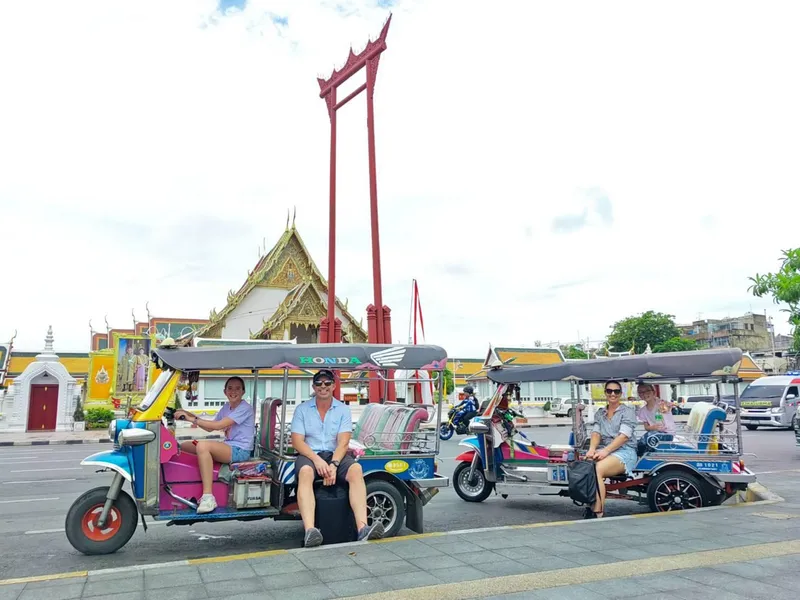
There is no more Bangkok way to see Bangkok than from the back of a tuk tuk. That rattling, open-sided three-wheeled taxi has been weaving through the capital's streets since the 1960s and remains the city's most recognisable symbol — part transport, part tourist rite of passage, part sensory adventure. This 3-hour guided tour puts you in a private tuk tuk and takes you directly to the temples, shrines and city neighbourhoods that define the Thai capital. For a full picture of what to do in the city, browse all bangkok thailand tours available on this site.
- 4.7★, 1,211 reviews
- 3 hours
- Private tuk tuk
- Temples & shrines
- Free cancellation
What Is a Classic Bangkok Tuk Tuk Tour?
A classic Bangkok Thailand tours tuk tuk ride is a guided city journey in a traditional three-wheeled motorised vehicle — Bangkok's most iconic mode of transport. Unlike taking a tuk tuk as a solo taxi, this is a structured 3-hour tour with an English-speaking guide who accompanies you, explains each site and navigates the city so you can focus entirely on the experience.
Ride in an authentic Thai tuk tuk — open-air, three-wheeled and unmistakably Bangkok
Visit Wat Pho, Wat Traimit, the City Pillar Shrine and several hidden neighbourhood shrines
Pass through Chinatown, Pahurat Fabric District and the Old City streets most tourists never walk
Your guide rides with you and provides live commentary on history, culture and street life
3 hours of rolling city sightseeing with stops at each major site
Cancel up to 24 hours before the tour for a full refund — no questions asked
Check Availability for Your Bangkok Tuk Tuk Tour
What It Actually Feels Like to Ride a Bangkok Tuk Tuk
The first thing you notice is the noise. A tuk tuk engine is not a quiet machine — it is a small motorcycle engine tuned for acceleration, and when the driver guns it away from a traffic light, the sound echoes off shophouse walls and fills the air with a high-pitched whine that is as much Bangkok as the smell of pad thai frying on the pavement beside you.
Then comes the wind. Tuk tuks have no windows, no doors and sometimes no roof panels — just a metal frame and a canopy. At speed through the city streets, the warm Bangkok air rushes past your face and arms.
In the heat of the day this is a genuine relief. In the early morning it carries the smell of jasmine garlands from a nearby shrine stall, frangipani trees and temple incense all at once.
And then there is the traffic. Bangkok traffic is notorious, and a tuk tuk puts you right in the middle of it — not sealed behind glass, but open to every bus that rumbles past a foot from your elbow, every motorcycle that slips through a gap at speed, every street vendor who leans in to offer something through the frame as you wait at a junction. It is chaotic, vivid and completely addictive.
Why a Tuk Tuk Tour Beats Walking
The temples and shrines on this route are spread across several Bangkok neighbourhoods. On foot in the tropical heat, covering the same ground would take most of a day and leave you exhausted before you reached the third stop. In a tuk tuk, transit time between sites is 5–10 minutes, the breeze keeps you comfortable, and your guide uses the riding time to brief you on what you are about to see.
You arrive at each site alert, oriented and ready to explore — not sweaty and disoriented from navigating unfamiliar back streets.
Temples and Shrines You Will Visit
Wat Pho — Temple of the Reclining Buddha
Wat Pho is Bangkok's oldest and largest temple complex, covering 8 hectares in the heart of the Old City. Its centrepiece is a 46-metre Reclining Buddha covered in gold leaf — one of the largest Buddha images in Thailand. The soles of the feet alone are 5 metres tall, inlaid with 108 auspicious symbols in mother-of-pearl.
Beyond the main viharn, the grounds contain dozens of smaller chedis (stupas), colonnaded galleries of Buddha images and the original headquarters of Thailand's traditional massage. Plan 20–30 minutes here.
Wat Traimit — Temple of the Golden Buddha
Located at the western edge of Chinatown, Wat Traimit houses what is arguably the most extraordinary object in Bangkok: a solid gold Buddha image weighing five and a half tonnes. It was discovered by accident in 1955 when a stucco casing cracked during a building move — the gold beneath had been hidden for centuries to protect it from Burmese invaders. The image now sits on the fifth floor of a purpose-built marble building.
The lower floors contain an excellent permanent exhibition on the history of Bangkok's Chinatown (Yaowarat) and the Teochew Chinese community that built it.
The City Pillar Shrine
Tucked into a small building just east of the Grand Palace, the Lak Mueang (City Pillar Shrine) is one of the most sacred sites in Thailand yet almost unknown to first-time visitors. It houses the founding pillar of Bangkok — a gilded wooden post erected by King Rama I in 1782 when he established the city as the new capital. Thai people come here to pray for good fortune, pass exams and find lost objects.
A traditional dance troupe often performs inside as an offering. Visiting as part of a tuk tuk tour Bangkok Thailand gives this place the context it deserves.
Neighbourhood Shrines and Street Altars
Beyond the headline temples, your guide will point out the smaller shrines that appear on almost every Bangkok street corner — elaborate spirit houses draped in marigold garlands, incense burners outside shopfronts, and roadside Brahmin shrines that predate Buddhism's arrival in Thailand. These micro-shrines are easy to miss on a walking map but unmissable when you are rolling past at tuk tuk pace with a guide explaining their meaning.
City Neighbourhoods You Pass Through
Bangkok's Old City (Rattanakosin Island)
The tour begins and spends much of its time in Rattanakosin Island, the historic core of Bangkok built on an artificial island formed by a canal loop in the Chao Phraya River. This is where the Grand Palace, Wat Pho and the major government buildings stand — grand 18th and 19th-century structures built when Bangkok was at the height of its power. The streets between them are narrow, shaded by old rain trees, and still used by locals walking to morning alms-giving and market vendors setting up before sunrise.
Yaowarat — Bangkok Chinatown
No tuk tuk tour through Bangkok is complete without a pass through Yaowarat Road, the spine of Bangkok's Chinatown. The street is lined with gold shops, seafood restaurants that have been operating for three generations, dried goods merchants and a dizzying number of neon signs in Thai and Chinese. Even during the day the energy is high.
Chinatown has been here since the founding of Bangkok — the Teochew community was granted this neighbourhood by King Rama I — and it retains its own distinct identity within the city.
Pahurat — Bangkok's Little India
Just west of Chinatown, Pahurat is Bangkok's South Asian district, centred on a covered fabric market selling silk, cotton, sari cloth and theatrical costume supplies. The streets smell of chai and fresh spices. Golden Sikh temples sit alongside Hindu shrines and Muslim restaurants.
This neighbourhood is the product of Bangkok's long history as a Southeast Asian trading hub, and rolling through it by tuk tuk — unexpected, vivid, completely different from the temple district two streets away — is one of the tour's most memorable moments.
Classic Bangkok Tuk Tuk Tour — 3-Hour Route
-
09:00
Tour Starts — Meeting Point and Tuk Tuk Briefing
Meet your English-speaking guide at the designated meeting point near the Old City. Your guide introduces the tuk tuk, explains the route and gives a brief orientation to the neighbourhood before you board and set off.
-
09:15
City Pillar Shrine (Lak Mueang)
First stop is the sacred founding pillar of Bangkok. Your guide explains the significance of the shrine and the Buddhist and Brahmin traditions observed here. This is a genuinely sacred site — remove shoes and speak quietly inside the building.
-
09:40
Old City Streets and Royal Grounds
Your tuk tuk rolls along the streets bordering the Grand Palace and Sanam Luang, the great ceremonial field used for royal funerals and kite-flying festivals. Your guide points out architectural details and historical context as you pass.
-
10:00
Wat Pho — Temple of the Reclining Buddha
A 25-minute stop at Wat Pho to view the monumental 46-metre Reclining Buddha, explore the surrounding chedis and, if you wish, receive a traditional Thai foot massage at the temple's on-site massage school (additional cost, not included).
-
10:30
Chinatown (Yaowarat) — Tuk Tuk Ride Through the Gold District
Your driver threads the tuk tuk through Yaowarat's narrow lanes, past gold shops, dim sum restaurants and old shophouse facades. Your guide explains the Teochew Chinese community's history in Bangkok and points out hidden temple gates along the way.
-
10:50
Wat Traimit — Golden Buddha Temple
Visit the Temple of the Golden Buddha in the heart of Chinatown. Ride the lift to the fifth floor to see the 5.5-tonne solid gold image, then browse the lower-floor exhibition on Chinatown's history at your own pace.
-
11:20
Pahurat Fabric District and Tour End
Final ride through Bangkok's Little India neighbourhood before returning to the meeting point, approximately 3 hours after departure. Your guide is available for restaurant recommendations or onward transport suggestions.
Important Things to Know Before Your Tuk Tuk Tour
What to Bring
- A sarong or light scarf — required to cover shoulders and knees inside all temples (can be rented at temple gates for around 20–50 THB if you forget)
- Slip-on shoes or sandals — you will remove footwear at every temple entrance; laces slow you down considerably
- Sunscreen and a hat — the tuk tuk provides ventilation but no shade from direct sun when stationary at sites
- A small amount of Thai baht cash — for temple entrance donations, incense offerings or any street food impulse buys en route
- A camera or phone with a full charge — this tour passes through some of the most photogenic streets in Bangkok
- A refillable water bottle — Bangkok in the morning is warm; staying hydrated keeps the experience enjoyable
Not Allowed
- Shorts above the knee inside temple viharns — most temples provide wraps but it adds time and cost
- Sleeveless tops inside temple buildings — shoulders must be covered to enter the main halls at Wat Pho and Wat Traimit
- Pointed feet toward Buddha images — a basic Thai temple etiquette rule your guide will remind you of
- Loud voices or phone calls inside temples — these are active places of worship, not museums
- Flash photography inside some shrine buildings — follow your guide's direction at each site
Safety in a Tuk Tuk
Tuk tuks are a safe and regulated form of transport in Bangkok, used by millions of people daily. The vehicles are purpose-built for city traffic and your driver is a licensed professional who knows the roads well. For your comfort: hold on to the frame when accelerating from traffic lights, keep arms and camera straps inside the vehicle on narrow streets, and follow your guide's advice about when to sit back and when to lean in for a photo.
Children must be kept seated and supervised at all times. The open sides of the vehicle are part of the experience — they are also the reason you hear, smell and feel everything Bangkok has to offer.
Who This Tour Is For
Best For
- First-time visitors to Bangkok who want a fast, fun and context-rich introduction to the city's major sites
- Couples and small groups who want a private experience rather than a shared group bus tour
- Photography enthusiasts — the open tuk tuk frame gives unobstructed angles at every stop
- Travellers with limited time who want to cover the Old City, Chinatown and two major temples in a single morning
- Anyone who wants to experience Bangkok from street level rather than from behind an air-conditioned window
Not Suitable For
- Travellers with severe mobility limitations — tuk tuks require stepping up into a low vehicle and walking short distances at each temple
- People who are sensitive to noise and exhaust fumes — Bangkok traffic is loud and tuk tuks are open-air
- Those hoping to include Wat Arun or the Grand Palace interior — this tour covers the exteriors and streets of the Old City; those sites require separate tickets and significantly more time
- Visitors who prefer a slow, deeply detailed temple experience — this tour covers multiple sites at a pace that prioritises variety over depth at any single location
Bangkok Tuk Tuk Tour — Frequently Asked Questions
Is a tuk tuk tour in Bangkok safe?
Yes. Licensed tuk tuk drivers in Bangkok are experienced city professionals and the vehicles are maintained to road safety standards. Your guide accompanies you throughout the tour and is responsible for your safety and comfort at all times. The open sides of a tuk tuk can feel exposed compared to a car, but this is precisely what makes the experience memorable — just keep hands and camera straps inside the vehicle on narrow streets and follow your guide's advice.
What temples does the Classic Bangkok Tuk Tuk Tour visit?
The tour visits Wat Pho (Temple of the Reclining Buddha), Wat Traimit (Temple of the Golden Buddha in Chinatown), and the City Pillar Shrine (Lak Mueang). You also pass through the Old City streets surrounding the Grand Palace and through Bangkok's Chinatown and Pahurat (Little India) neighbourhoods. The tour focuses on street-level city life and temple culture rather than single-site deep dives.
Do I need to dress a certain way for the tour?
Yes — temple dress codes are strictly enforced at Wat Pho and Wat Traimit. Shoulders and knees must be covered to enter the main temple buildings. Slip-on shoes or sandals are strongly recommended since you will remove footwear at every temple entrance. If you arrive in shorts or a sleeveless top, wraps are available for rent at temple gates for 20–50 THB, but having your own avoids the delay. Your guide will brief you on etiquette at each stop.
What is the best time of day to take a Bangkok tuk tuk tour?
Morning is the best time — ideally a 9:00 or 9:30 start. The temples are quieter, the light is better for photography, and Bangkok's heat is manageable before noon. By early afternoon, both temple crowds and temperatures peak significantly. This tour is designed for a morning departure to take full advantage of cooler conditions and fewer visitors at each site.
What other Bangkok tours can I combine this with?
A morning tuk tuk tour pairs well with an afternoon river or canal experience for a complete city day. You can browse the full range of guided city experiences, day trips and cultural tours at bangkok thailand tours — from floating market excursions and Ayutthaya day trips to Muay Thai boxing evenings and Bangkok food tours in Chinatown.
What Travellers Say About the Bangkok Tuk Tuk Tour
Absolutely loved every minute of this tour. Our guide was brilliant — funny, knowledgeable and completely unfazed by Bangkok traffic. The tuk tuk itself is such a fun way to move through the city. We covered more ground in 3 hours than we would have managed on foot in a full day, and the stops at Wat Pho and Chinatown were perfectly timed. Booked this on our first morning and it set the tone for our whole Bangkok trip.
The tuk tuk ride alone is worth every baht. We zoomed through Bangkok's backstreets, under low bridges, between market stalls — with the wind in our faces and our guide pointing out things we would never have noticed on our own. The Golden Buddha at Wat Traimit genuinely stopped us in our tracks. Five and a half tonnes of solid gold. We were not expecting to be that moved by it. Great, well-organised tour — highly recommend for first-time Bangkok visitors.
I was a bit sceptical about a tuk tuk tour — they always sound a bit touristy. But this was genuinely one of the highlights of our Thailand trip. The guide knew when to talk and when to let us absorb the surroundings. Chinatown at tuk tuk speed is chaotic and beautiful. The City Pillar Shrine was a surprise — quiet, sacred and completely off our radar before this tour. Really well put together.