Muay Thai Boxing Bangkok — Rajadamnern Stadium Tickets & What to Expect (2026)
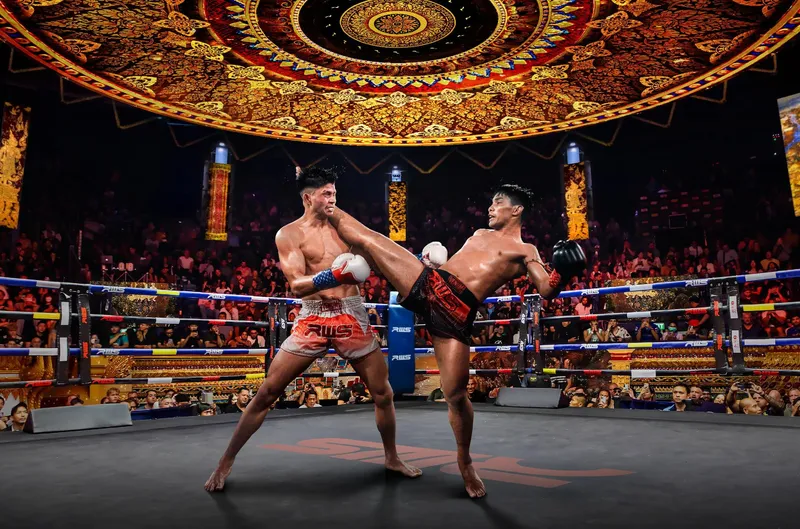
Watching live Muay Thai in Bangkok is one of those experiences that requires no prior knowledge of combat sports to be completely riveting. At Rajadamnern Stadium — the oldest and most respected Muay Thai venue in Thailand — five or six bouts unfold across a three-hour evening, each escalating in intensity as the night progresses. Fighters are professionals, the crowd is real, and the atmosphere is unlike anything in a conventional tourist setting. If you're exploring bangkok thailand tours and want one evening that needs no translation, this is it. Here is everything you need to know before booking your ticket.
About This Activity
Cancel up to 24 hours before — full refund
No upfront payment required at booking
Typically 5–6 professional bouts per evening
Bangkok's oldest stadium, operating since 1945 — the sport's spiritual home
Standard seats $23 · Ringside $45 — both see the same bouts
Most reviewed Muay Thai stadium experience in Bangkok
Check Live Availability & Prices
Rajadamnern fights on Mondays, Wednesdays, Thursdays, and Sundays. Check available dates and seat tiers below — free cancellation up to 24 hours before.
Why Rajadamnern Stadium Is Bangkok's Best Muay Thai Venue
Bangkok has two major Muay Thai stadiums: Rajadamnern and Lumpinee. Both host professional fights. Rajadamnern, which opened in 1945 on Rajadamnoen Nok Avenue, is the older of the two and is widely considered the sport's historical home in Thailand. The fighters who compete here are professionals contracted through the Thai boxing promotion system — not performers staged for tourist audiences.
The distinction matters. Rajadamnern's bouts are sanctioned professional fights with real judges, real stakes and a paying Thai crowd that has been following Muay Thai for decades. When the gamblers around the ring start communicating rapid hand signals across the stadium, that's not theater. When the crowd reacts to a clinch or a clean elbow strike, it's because they know what they're watching.
The stadium seats around 2,000 people. On a typical fight night the crowd is mixed — Thai regulars, foreign travelers, boxing enthusiasts and people who simply walked in having never watched Muay Thai before. The atmosphere works for all of them because the fights are good enough to be self-explanatory.
- Rajadamnern Stadium opened in 1945 — the oldest professional Muay Thai venue in Thailand
- Sanctioned professional bouts with Thai judges and official weight classes
- Mixed crowd of Thai regulars and international visitors — not a tourist-only show
- Fights on Mondays, Wednesdays, Thursdays, and Sundays — most frequent of any Bangkok stadium
- 4.6 stars from 2,114 independent reviews — the most reviewed Muay Thai venue on GetYourGuide
Understanding Muay Thai — What You're Watching in the Ring
The Eight Limbs
Muay Thai is called the Art of Eight Limbs because fighters use eight points of contact: two fists, two elbows, two knees, and two feet. This distinguishes it from Western boxing (two fists) and kickboxing (four limbs) and explains why Muay Thai is so respected as a base art in mixed martial arts.
In practice, this means you will see punches, body kicks, head kicks, elbow strikes from close range, knee strikes in the clinch, and sweeping trips. Each fighter typically has a style that emphasises certain weapons — some are pure kickers, others live in the clinch working knees and elbows, others are counter-punchers who read pressure. Watching a stylistic mismatch between a pressure fighter and a counter-striker is often more interesting than watching two similar fighters.
- Two fists — standard punching combinations
- Two elbows — close-range cutting strikes, often drawn blood
- Two knees — especially in the clinch (plum grip)
- Two feet — teep (push kick), round kick, axe kick, spinning heel
How to Read a Bout
Muay Thai scoring differs from Western boxing. Judges prioritise clean technique, effective aggression, and the quality of individual strikes over volume of punches thrown. A fighter who lands fewer but cleaner kicks scores higher than one who throws constant low-power combinations.
The clinch (khao) is a critical phase of every bout that newcomers often misread as stalling — in fact the fighters are working constantly, using the grip to off-balance the opponent, land short knees to the ribs and thighs, and set up sweeps. When a fighter breaks free from a clinch with a clean elbow, the crowd reacts because that transition represents real skill.
Scoring follows a five-round format (three minutes per round, two-minute rest). Early rounds are typically slower as fighters assess each other. The betting action in the crowd — the rapid hand signals you'll see flashing across the stadium — peaks in rounds three and four when both fighters have shown their cards.
- Scoring rewards technique and clean strikes, not volume
- The clinch is active — knees, elbows, sweeps and body positioning
- Five rounds of three minutes each — early rounds are exploratory
- Knockouts, TKOs, or judge's decision after five rounds
- Betting communication between Thai spectators is a stadium tradition — read as signals, not arguments
The Pre-Fight Ritual — Wai Kru
Before each bout, both fighters perform the Wai Kru Ram Muay — a ritual dance that serves as prayer, warm-up, and demonstration of the fighter's training camp style. Wai means to pay respect; kru means teacher. The fighter is publicly thanking their trainer, their camp, and the traditions of Muay Thai.
Each fighter's Wai Kru is personal and distinct — some camps have recognisable signature movements, others are more improvised. The ritual typically lasts two to three minutes and is performed to live Sarama music: an oboe-like instrument (Pi Khaen) and drums that continue throughout the fight, speeding up as the action intensifies.
Watching the Wai Kru without knowing its meaning is still visually impressive. Knowing the meaning makes it genuinely moving — two professional fighters in the highest-pressure moment of their competitive calendar, taking three minutes to show gratitude before they try to knock each other out.
- Wai Kru performed before every bout — a prayer and tribute to the fighter's trainer
- Each camp has a distinct Wai Kru style — experienced spectators recognise the training camp
- Accompanied by live Sarama music: Pi Khaen oboe and battle drums
- Music continues throughout the fight and speeds up with the action
- The ritual reveals the fighter's character as much as their first-round technique
An Evening at Rajadamnern Stadium — What Happens and When
-
18:30
Arrive at Rajadamnern Stadium
Arrive 30 minutes before the first bout. Collect tickets, find your seat, and get your bearings. Ringside ticket holders should arrive promptly — seats are assigned but latecomers can find the best views obstructed. Food and drinks are available inside (cash recommended). The stadium is on Rajadamnoen Nok Avenue — a short taxi or Grab ride from most Bangkok hotels.
-
19:00
First bout — preliminary fighters
The evening opens with the lightest and most junior weight classes. These are genuine professional fights but the combatants are typically newer to the professional ranks. The Wai Kru rituals introduce each fight. The crowd is warming up. Sarama music begins and continues through the evening.
-
19:40
Second and third bouts — mid-card fights
Progressively more experienced fighters. By the second and third bouts the tactical patterns become clearer — you start recognising fighter styles, clinch preferences, and which weapons each fighter favours. This is when the betting signals between Thai spectators become visible in the stands.
-
20:30
Main card begins — skill level escalates
The fourth and fifth bouts are the main card: higher-ranked fighters in the heavier divisions. The technique, power, and strategic complexity step up noticeably. Crowd noise increases, the Sarama music is faster, and the betting action peaks. If there are five bouts this evening, this is where the night earns its reputation.
-
21:30
Headline bout
The final fight of the evening is the most anticipated: the highest-ranked fighters on the card, sometimes title bouts or inter-camp rivalries with history behind them. The crowd is fully engaged. If any bout ends by knockout or technical stoppage, this is usually where it happens — both fighters at maximum intensity with nowhere left to pace themselves.
-
22:00
Evening concludes
The stadium clears within 15 to 20 minutes of the final bout. Grab and taxis are available outside. Many visitors continue to Khao San Road, Banglamphu, or the nearby night bars — the stadium's location puts you within 10 minutes of central Bangkok's nightlife.
Important Things to Know Before You Go
What to Bring
The stadium is air-conditioned but dress comfortably — you'll be seated for three hours in a lively crowd. Standard seats are open bench-style with good sightlines from most positions. Ringside seats are padded chairs very close to the canvas, offering a floor-level view of the footwork and technique that the upper tiers miss.
- Comfortable clothing — you'll be seated for up to three hours; the stadium is air-conditioned
- Cash for food and drinks inside — vendors accept Thai baht; credit cards not always available at concessions
- Camera without flash — photography during bouts is permitted but flash photography is not
- Arrive 30 minutes early if you have ringside seats — assigned seating but you want time to settle before the first Wai Kru begins
Not Allowed
- Flash photography during bouts — disrupts fighters and is prohibited throughout the evening
- Entering the ring area or ropes — the canvas is reserved for fighters, corners and officials
- Bringing in outside food and drinks — the stadium has its own vendors inside
Seat Tiers Explained
There are two ticket tiers and the difference is meaningful — not just comfort but perspective. Standard seats ($23) are elevated stands with a full overhead view of the ring: you see the full geometry of the fight, the footwork patterns, and the bout as a whole. Ringside seats ($45) place you directly beside the canvas: you're close enough to hear corner instructions, see individual strikes in detail, and feel the crowd energy from inside the action.
Neither is inferior — they offer different viewing experiences. If you've watched combat sports before, ringside is worth the premium. If this is your first Muay Thai event, standard seats give you the full tactical picture.
- Standard seats ($23) — elevated stands, full ring overview, tactical perspective on each bout
- Ringside seats ($45) — floor-level, close to the canvas, hear the corners, feel the atmosphere
- Both tiers see exactly the same fights — the difference is perspective, not content
- Ringside seats limited — book early, especially for Thursday and Sunday card nights
Who This Tour Is For
Best For
A Rajadamnern Stadium evening works for a much wider audience than most people expect. You don't need to follow combat sports, know anything about Muay Thai, or be comfortable with physical confrontation as a concept. The skill level on display is high enough that the fights are interesting on purely athletic terms, the cultural elements — Wai Kru, Sarama music, the betting theatre — add layers that have nothing to do with the fighting itself, and three hours passes quickly.
- Combat sports fans of any level — boxing, MMA, kickboxing backgrounds all find Muay Thai immediately legible
- Travelers who want to experience Thai culture in a context that is genuinely Thai, not tourist-adapted
- Couples and groups looking for a high-energy shared evening out that doesn't require planning around food or language
- Anyone who has watched UFC or professional boxing and is curious about the discipline that many MMA fighters train as their striking base
- Solo travelers — stadium events are natural social settings; conversations with other spectators happen organically
Not Suitable For
- Those who object to combat sports on ethical grounds — the fights are real professional bouts, not theatrical
- Children under 8 years — the fights are intense, the crowd is loud, and the atmosphere is designed for adults
- Those sensitive to loud crowds and noise — the stadium is vocal, especially during the main card bouts
Muay Thai at Rajadamnern Stadium — Frequently Asked Questions
Which nights does Rajadamnern Stadium host fights?
Rajadamnern Stadium holds fights on Mondays, Wednesdays, Thursdays, and Sundays. Thursday and Sunday cards typically feature the most prominent fighters and the strongest billing. The venue does not hold fights every day — check available dates when booking to confirm the specific card you'll attend.
Is the standard seat or ringside ticket worth the price difference?
Both are worth attending — the fights are identical. Ringside seats ($45) place you close to the canvas where you can hear corner instructions, see individual techniques in detail, and feel fully inside the atmosphere. Standard seats ($23) give you an elevated overhead view of the full ring: better for reading the tactical patterns of each bout. First-time Muay Thai spectators often find the standard overhead view more instructive; experienced combat sports fans tend to prefer ringside.
Do I need to know Muay Thai to enjoy this?
No background knowledge is necessary. The strikes are fast and clear enough that the action reads without commentary. The Wai Kru pre-fight ritual and the live Sarama music make each bout an event regardless of your combat sports knowledge. The guide on the GetYourGuide listing provides a brief introduction to Muay Thai scoring before the first bout — context helps but is not required.
How do I get to Rajadamnern Stadium?
Rajadamnern Stadium is on Rajadamnoen Nok Avenue in central Bangkok, approximately 10 to 15 minutes by taxi or Grab from Silom, Sukhumvit (E14-E15 area), or Khao San Road. The stadium is not directly accessible by BTS Skytrain or MRT — a taxi or Grab ride is the practical option. Set the destination in Grab as 'Rajadamnern Stadium Bangkok' and the driver will know it immediately.
What else is near Rajadamnern Stadium for after the fights?
The stadium is a short ride from Bangkok's main entertainment areas. Khao San Road and the Banglamphu bar district are within 10 minutes. The Old City riverside bars along the Chao Phraya are nearby. For a different kind of evening, the bangkok nightlife tours on this site cover rooftop bars, tuk-tuk night tours, and Chinatown food crawls that pair well as a pre-fight or post-fight extension.
What Travelers Say About Muay Thai at Rajadamnern
I've watched UFC for years but had no idea what to expect from a live Muay Thai stadium. Rajadamnern completely exceeded my expectations. The Wai Kru ritual before each fight was genuinely moving — I didn't know what it meant at the time but looked it up afterwards and understood why the crowd went quiet for it. The main card bouts were elite-level striking. Ringside seats were worth every baht.
My wife had zero interest in boxing and I talked her into this. By the third bout she was fully invested, asking me to explain why the judges scored each round the way they did. The atmosphere in the stadium does that — the Sarama music, the crowd energy, the pre-fight rituals. It's not just a fight. It's an experience that makes sense even if you know nothing about Muay Thai going in.
Arrived not knowing anything about seat differences and bought the standard ticket. Perfect decision for a first visit — the elevated view let me follow the footwork and ring positioning clearly. The betting signals flashing around the arena between Thai spectators are fascinating to watch even if you have no idea what they mean. One of the best evenings of the trip.